Friday, November 4, 2016

Prostate Cancer News - 2016-11

Prostate Cancer News - 2016-11

General News

About prostate cancer research, cases and public awareness:

Case Management

Planning a campaign against prostate cancer:

Life Choices

can influence the odds in your favor:

Diet

can starve the cancer

Exercise

Screening and Diagnosis

is important because symptoms appear too late for treatment:

Biopsies and Pathology

Genomics

Tests

Imaging


Treatment

Active Surveillance AS


Surgery RP

frequently the first choice for localized PCa, robotic assist dominates:

Radiation RT


Hormone ADT


Chemo


Immunotherapy

New Techniques

Side Effects


Advanced/Recurrence


Sunday, October 16, 2016

Preparation of IPCSG Newsletter


Subject: IPCSG Newsletters


Programs required:

Have a Windows PC with internet access and have knowledge of the following Programs
  1. Microsoft Word,  
  2. Microsoft Publisher [4 Alternatives to Microsoft Publisher] and  
  3. Microsoft PowerPoint. 


files used to create the newsletter.  

  1. The Word file “Newsletter Notes July.docx” is where I begin gathering data to drop into 
  2. the Publisher file “IPCSG 2016 July Newsletter Final.pub” (This starts out as a Draft file).  
Production Files
  1. distribute draft.pub and .pdf files to Lyle, Gene Van Vleet and John Tassi for comment---probably now to me as well.  
  2. create Final .pub and .pdf files. 

newsletter process steps:

  1. start by calling up the previous Final.pub file and edit it. 
  2. create a recap of the previous month’s meeting.  
    1. The tools are a rough-cut video provided by Bill Manning, our videographer, usually only a few days after the meeting.  It comes from the 2nd camera that you may have noticed on the right side of the auditorium and is unedited.  
    2. get a copy of each speaker’s PowerPoint file.  I work with a note pad to drop in significant data by viewing the video and pulling up the slides from PowerPoint as an aid. 
    3. create the recap from the notes in a draft .pub file---this could be done in word first if preferred. 
  3. start developing the data for the succeeding pages. 
    1. “Future Meetings” (Page 3 of the attached Newsletter) is updated by communications with George Johnson and/or Gene Van Vleet .  
    2. The FYI is sourced by me, Lyle and George, primarily. 
    3. On The Lighter Side” section is on page 4.  
      1. I google funny cartoons and drop a few I like on the Word document.  
      2. I google things like “About Humor” and “Aha Jokes” to develop the humor stuff.  
    4. develop the Prostate Cancer News articles to include in the newsletter.  
      1. google Prostate Cancer News and find the best sources are
        Medical News Today,
        Science Daily,
        Prostate Cancer News Today and
        Prostate Cancer Foundation
        to name a few.  You will find that many have the same stories.  
      2. try to focus on the most recent.  Try to fit to our general audience, I try not to pick highly technical articles.  PCRI puts out some good info.  You should get on their distribution. I drop articles I like on the Word document for starters, because they have to be edited for the Newsletter by sizing and often converting to the format used in the newsletter—Gill Sans MT font size 12. 
  4. Prepare final draft. 
    1. sort through the stuff developed on the word document and start dropping it in the .pub draft.  This requires text box sizing and page adds or deletions to get to the final product.  
    2. The text boxes on page 9 of the July sample are standard as is the last page which is the map and directions. 
    3. There is no “copyright” in how I have developed it.  I had to learn all the programs when I took over.  IPCSG will pay for any needed programs. 
  5. Timing of the newsletter is to get the final version to John Tassi, our webmaster, on Thursday of the week prior to the next meeting.  
    1. It is necessary to print about 80 copies, about 
    2. 50 get mailed to members who don’t do e-mail and about 
    3. 30 to put on the meeting freebie table. 

Sunday, October 9, 2016

SACHI uses Soli in RadarCat to Identify Real-World Objects

SACHI | RadarCat for object recognition
RadarCat Doesn't Purr, But It Can Identify Real-World Objects | Digital Trends
Researchers at the University of St Andrews in Scotland recently figured out a way for a computer to recognize different types of materials and objects ranging from glass bottles to computer keyboards to human body parts. They call the resulting device RadarCat, which is short for Radar Categorization for Input and Interaction. As the name implies, this device uses radar to identify objects.
RadarCat was created within the university’s Computer Human Interaction research group. The radar-based sensor used in RadarCat stems from the Project Soli alpha developer kit provided by the Google Advanced Technology and Projects (ATAP) program. This sensor was originally created to detect the slightest of finger movements, but the RadarCat team saw even greater potential.

Read more: http://www.digitaltrends.com/computing/radarcat-machine-learning-radar-sensor-google-soli/#ixzz4MdFkaKWL
Follow us: @digitaltrends on Twitter | digitaltrendsftw on Facebook

New technology using radar can identify materials and objects in real timeProfessor Aaron Quigley, Chair of Human Computer Interaction at the University, explained, "The Soli miniature radar opens up a wide-range of new forms of touchless interaction. Once Soli is deployed in products, our RadarCat solution can revolutionise how people interact with a computer, using everyday objects that can be found in the office or home, for new applications and novel types of interaction."
The system could be used in conjunction with a mobile phone, for example it could be trained to open a recipe app when you hold a phone to your stomach, or change its settings when operating with a gloved hand.
A team of undergraduates and postgraduate students at the University's School of Computer Science was selected to show the project to Google in Mountain View in the United States earlier this year. A snippet of the video was also shown on stage during the Google's annual conference (I/O).
Professor Quigley continued, "Our future work will explore object and wearable interaction, new features and fewer sample points to explore the limits of object discrimination.
"Beyond human computer interaction, we can also envisage a wide range of potential applications ranging from navigation and world knowledge to industrial or laboratory process control."

Related/Background:

US and 44 Nations Declare Armed Drone Export/Use Limits


Global Drone Trade: World's Largest Importing And Exporting Countries
» CEOWORLD magazine


Unmanned Aerial Vehicles (UAVs)
An increasing number of States are acquiring and employing Unmanned Aerial Vehicles (UAVs) to support a range of missions, including military missions that promote peace and security. Individual States may already have laws and policies in place to ensure the responsible export and use of UAVs that are armed, or that include equipment related uniquely to the deployment or delivery of weapons. However, recognizing that misuse of armed or strike-enabled UAVs could fuel conflict and instability, and facilitate terrorism and organized crime, the international community must take appropriate transparency measures to ensure the responsible export and subsequent use of these systems. In this context, we continue to recognize the following principles, none of which should be construed to undermine the legitimate interest of any State to indigenously produce, export, or acquire such systems for legitimate purposes:
  • A. The applicability of international law, including both the law of armed conflict and international human rights law, as applicable, to the use of armed or strike-enabled UAVs, as with other weapon systems;
  • B. The importance of engaging in the responsible export of armed or strike-enabled UAVs in line with existing relevant international arms control and disarmament norms that help build confidence as to the peaceful intention of States;
  • C. That the export of armed or strike-enabled UAVs should be done consistent with the principles of existing multilateral export control and nonproliferation regimes, taking into account the potential recipient country’s history regarding adherence to its relevant international obligations and commitments;
  • D. The importance of appropriate voluntary transparency measures on the export of armed or strike-enabled UAVs including reporting of military exports through existing mechanisms, where appropriate, and with due regard to national security considerations; and
  • E. That in light of the rapid development of UAV technology and the benefit of setting international standards for the export and subsequent use of such systems, we are resolved to continue discussions on how these capabilities are transferred and used responsibly by all States.

We call upon other governments to support this declaration.

The declaration was issued by the United States and the governments of
  1. Argentina, 
  2. Australia, 
  3. Austria, 
  4. Belgium, 
  5. Bulgaria, 
  6. Canada, 
  7. Chile, 
  8. Colombia, 
  9. Czech Republic, 
  10. Estonia, 
  11. Finland, 
  12. Georgia, 
  13. Germany, 
  14. Hungary, 
  15. Ireland, 
  16. Italy, 
  17. Japan, 
  18. Latvia, 
  19. Lithuania, 
  20. Luxembourg, 
  21. Malawi, 
  22. Malta, 
  23. Montenegro, 
  24. Netherlands, 
  25. New Zealand, 
  26. Nigeria, 
  27. Paraguay, 
  28. Philippines, 
  29. Poland, 
  30. Portugal, 
  31. Republic of Korea, 
  32. Romania, 
  33. Serbia, 
  34. Seychelles, 
  35. Singapore, 
  36. Slovakia, 
  37. Slovenia, 
  38. South Africa, 
  39. Spain, 
  40. Sri Lanka, 
  41. Sweden, 
  42. Ukraine, 
  43. United Kingdom
  44. Uruguay.
World of Drones | The International Security Program
According to data collected by New America, there are 86 countries that have some sort of drone capability, both armed and unarmed. So far, eight countries have used armed drones in combat: the United States, Israel, the United Kingdom, Pakistan, Iraq, Nigeria, Iran, and Turkey. One non-state actor, Hezbollah, has also used armed drones in combat. But many other countries are arming drones and it’s only a matter of time before they deploy them in combat. According to New America’s research, 19 countries have armed drones or are acquiring armed drone technology.

All of These Countries Now Have Weaponized Drones
these are just the ones we know about.
Last week Nigeria joined a dubious international clique when it bombed a logistics base used by the militant group Boko Haram in the country’s northeast. Though the airstrike itself was unremarkable—the Nigerian Air Force has conducted hundreds of strikes against Boko Haram in recent months—it was the first Nigeria has delivered via an unmanned drone.

For many, the news wasn’t that Nigeria had used a weaponized drone in combat for the first time, but that the Nigerian military has weaponized drones at all. While it’s well-understood that military powers like the U.S., U.K., and China possess armed drones, it’s less well-known that Nigeria, South Africa, and Somalia (most likely) have them as well. Pakistan and Iraq have both used weaponized drones in combat inside their own borders. At least a dozen other nations have publicly declared they are pursuing armed drone technologies, and countless others seek to discreetly build or buy them as well.
In the past 18 months the weaponized drone club has quietly grown to double-digit membership, largely thanks to Chinese technology that is both less expensive and easier to obtain than U.S. drone technology.

So how many countries now possess armed drones? The long answer is nuanced, depending on what exactly constitutes a “weaponized drone.” The short answer is at least 10, and soon it will be a far larger club than that.

White House Rolls Out Armed Drone Declaration
Notably missing from the list of countries are Russia, China, India and Israel, seen as current or future exporters of armed drones. Israel, in particular, had previously expressed great skepticism about the deal.


For years, experts like Horowitz have warned that countries that may look to operate armed UAVs without regard for US norms would turn to those nations, a concern that still exists.

“One challenge for the United States and its allies and partners will be getting China, Russia and other actors on board with any joint declaration,” he said. “China, in particular, may view reluctance on the part of the US to export UAVs as a market opportunity.”

"Nilsson said there was “extensive engagement with both China and Israel,” and also had talks with Russia despite them being “not so much a producer or exporter.”

As to concerns that without big exporters of armed UAVs on board, the group has less impact than it otherwise might, Nilsson called it “a fair criticism — just as it’s fair to point out most governments don’t belong to [the informal, non-treaty Missile Technology Control Regime]. But there is merit to maintaining those export control regimes, even if the memberships are small.”

Israel’s Growing Arms Export - Languages Of The World
Israel is considered to be the world’s leading exporter of unmanned aerial vehicle (UAV). Missile-armed drones were developed by Israel to assassinate key militant leaders; the US has been using such drones against al-Qaeda, its first such ‘targeted killing’ mission being carried out in Yemen in November 2002. In 2001‑2011, Israeli companies were behind 41% of all UAVs exported to 24 countries, including the US, India, Russia, Nigeria, and Mexico.

Read more: http://www.languagesoftheworld.info/uncategorized/israels-growing-arms-export.html#ixzz4Mc5CdCVv

Fact Sheet: Joint Declaration for the Export and Subsequent Use of Armed or Strike-Enabled Unmanned Aerial Vehicles (UAVs)
This Joint Declaration will serve as the basis for discussions on a more detailed set of international standards for the export and subsequent use of armed or strike-enabled UAVs, which the United States and its partners will convene in Spring 2017. These discussions will be open to all countries, even if they choose not to join the Joint Declaration.

For further information, please contact the U.S. Department of State’s Bureau of Political-Military Affairs, Office of Congressional and Public Affairs at pm-cpa@state.gov, visit our website, and follow us on Twitter @StateDeptPM. 

Related/Background:

Saturday, October 8, 2016

Drone safety: User-centric control software improves pilot performance and safety

User-Centric Control Reduces Drone Accidents
| iHLS Israel Homeland Security
Drone safety: User-centric control software improves pilot performance and safety
The study was comprised of two experiments wherein participants used flight simulators to compare the ease and safety of user-centric controls (such as those used by an airplane pilot) with external piloting (remote control methods ranging from joysticks to smartphone apps).
The 30 participants had no prior experience driving drones or remote control cars, and were tasked with guiding their drone through an obstacle course. The study measured obstacle avoidance response time as well as avoidance success rate, and shows the user-centric interface improving performance on both counts.
Findings support the conclusion that a user-centric interface design significantly improves performance of drone pilots, and resolves some of the user control issues undermining drone safety.
Professor Kwangsu Cho explains "despite increases in drone-crashes, research and development on user-centered control interfaces has been limited. The user interface of drones is critical to safety, quality piloting, and satisfaction. We are developing other user-centered drone interfaces especially for non-experts, and are eager to collaborate with manufacturers to improve safety".

Fly a Drone Safely: Evaluation of an Embodied Egocentric Drone Controller Interface
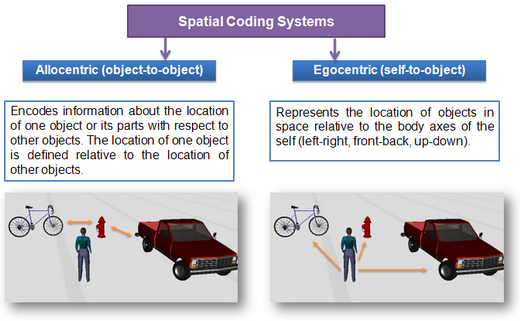
Abstract - As the activity of flying drones becomes increasingly widespread, drone accidents are also increasing. Many of these accidents are related to operational issues and, therefore, it is urgent to improve drone controls. The purpose of this study was to evaluate the usability of a drone controller interface supporting an external pilot's egocentric perspective. The interface tried to solve the problem of misaligned perspectives that arise from controllers constructed from a drone-centric or allocentric perspective. To achieve this, two experiments were performed to identify the differences in control performance depending on embodied mental rotation. The results of the experiments revealed that the controller designed from the pilot's egocentric point of view had a stronger performance regardless of the direction of drone flight. Based on the results, implications are discussed.
  • External piloting is considered as one of the fundamental causes of frequent drone crashes.
  • External piloting causes a misalignment problem due to the difference between the drone-centric or allocentric perspective and an external pilot's egocentric perspective.
  • The egocentric drone control interface outperforms the traditional, drone-centric control interface by removing the cognitive load of mental rotation generated by the process of aligning two different perspectives.

Related/Background:

GA-ASI funded to join Boeing and LM in next phase of MQ-25 Stinger Carrier Based UAV design

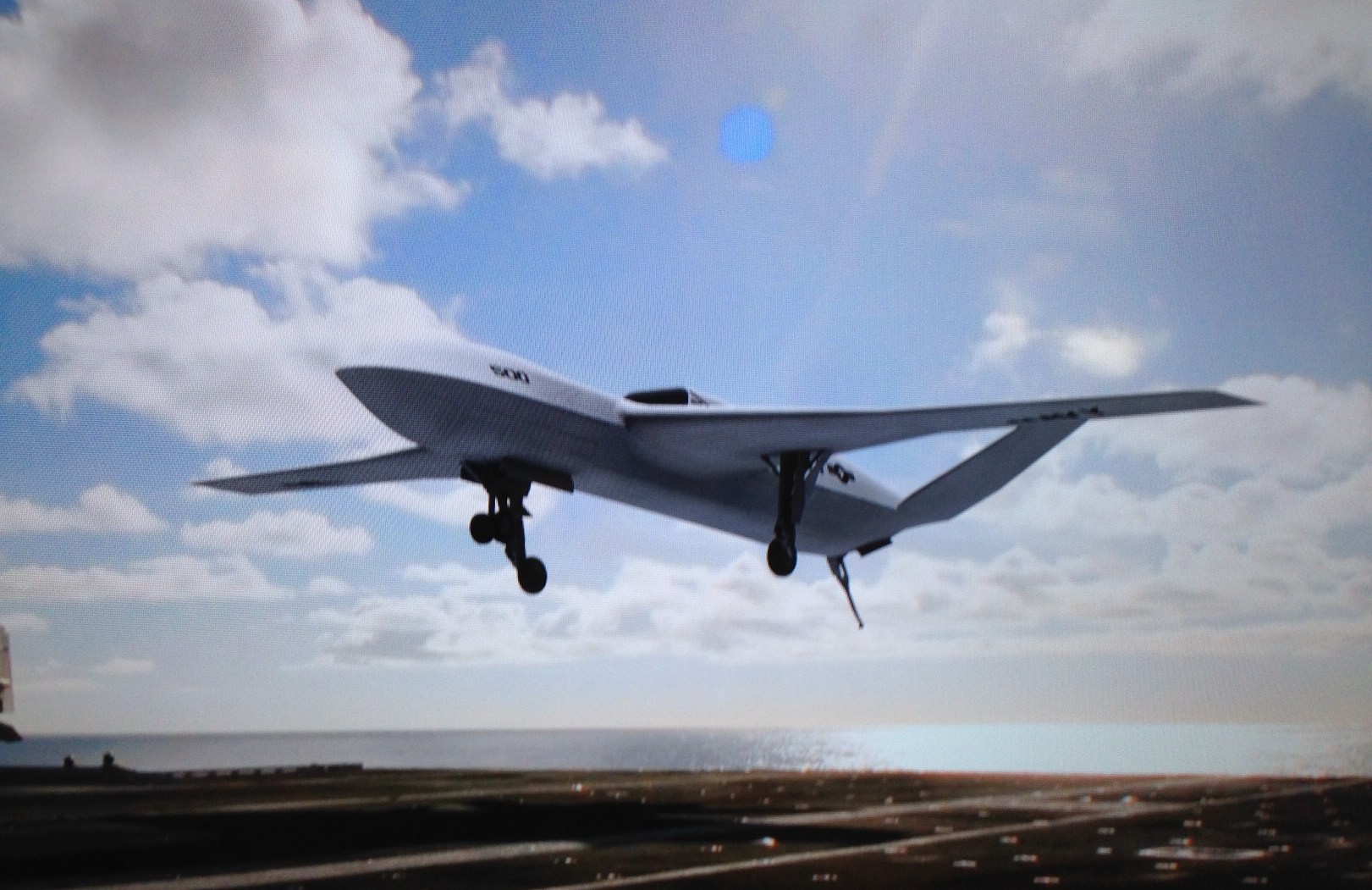
Concept for MQ-25 Stingray
Navy Awards Another Contract For MQ-25 Carrier-Based Drone | Defense Daily Network
General Atomics Aeronautical Systems Inc. (GA-ASI) has become the third company to receive a concept refinement contract for the U.S. Navy's new MQ-25 program, which aims to develop a carrier-based unmanned aircraft.GA-ASI, whose one-year, $43.7 million contract.

Navy Taps Boeing, Lockheed for MQ-25 Carrier UAV Risk Reduction Contracts
The U.S. Navy has awarded a $43.4 million contract to Boeing (NYSE: BA) and a $43.6 million contract to Lockheed Martin (NYSE: LMT) to provide risk reduction measures for the military branch’s first carrier unmanned aerial vehicle program.
Boeing and Lockheed will also refine concepts and develop trade space models to support requirements generation ahead of the MQ-25 program’s engineering and manufacturing development phase, the Defense Department said Friday.


General Atomics joins Boeing and LM in de-risking MQ-25 unmanned tanker | IHS Jane's 360
The contract, announced by the Department of Defense (DoD) on 4 October, follows previous awards to Boeing and Lockheed Martin to refine the MQ-25 concept ahead of the engineering and manufacturing development (EMD) phase of the programme. A fourth contract for Northrop Grumman is expected to be awarded shortly.

Alongside Boeing and Lockheed Martin, GA-ASI now has through to the end of October 2017 to conduct its de-risking activities before release of a draft request for proposals and the commencement of EMD.

Lockheed Martin and Boeing score contracts for unmanned Navy tanker
Lockheed Martin and Boeing each received $43 million risk reduction contracts on 23 September from the US Navy. Two more bidders, Northrop Grumman and General Atomics Aeronautical Systems, are waiting for their awards.

The new round of contracts pays the contractors to convert their preliminary designs, which were tuned to support the navy's original requirement for a stealthy, carrier-launched surveillance and strike aircraft (UCLASS).

A four-way competition to build the US Navy's next carrier-based unmanned air system (UAS) expect to begin revising year-old, preliminary designs that were submitted before the mission changed.

Lockheed Martin and Boeing each received $43 million risk reduction contracts on 23 September from the US Navy. Two more bidders, Northrop Grumman and General Atomics Aeronautical Systems, are waiting for their awards.

The new round of contracts pays the contractors to convert their preliminary designs, which were tuned to support the navy's original requirement for a stealthy, carrier-launched surveillance and strike aircraft (UCLASS).

The navy has since converted the MQ-25 programme into the carrier-based airborne refueling system (CBARS). Rather than penetrating into defended airspace to detect and attack targets, the MQ-25s will mostly serve as an escort or "buddy" tanker for manned strike aircraft. The MQ-25 also would be equipped with a 19-23in-diameter forward looking infrared sensor turret for a surveillance mission in permissive airspace.

Related/Background:

Sunday, October 2, 2016

USS Princeton longest range SM-6 air intercept in naval history

US Navy boasts longest range anti-air warfare intercept in Navy history


Navy Conducts Longest Range AAW Intercept from USS Princeton
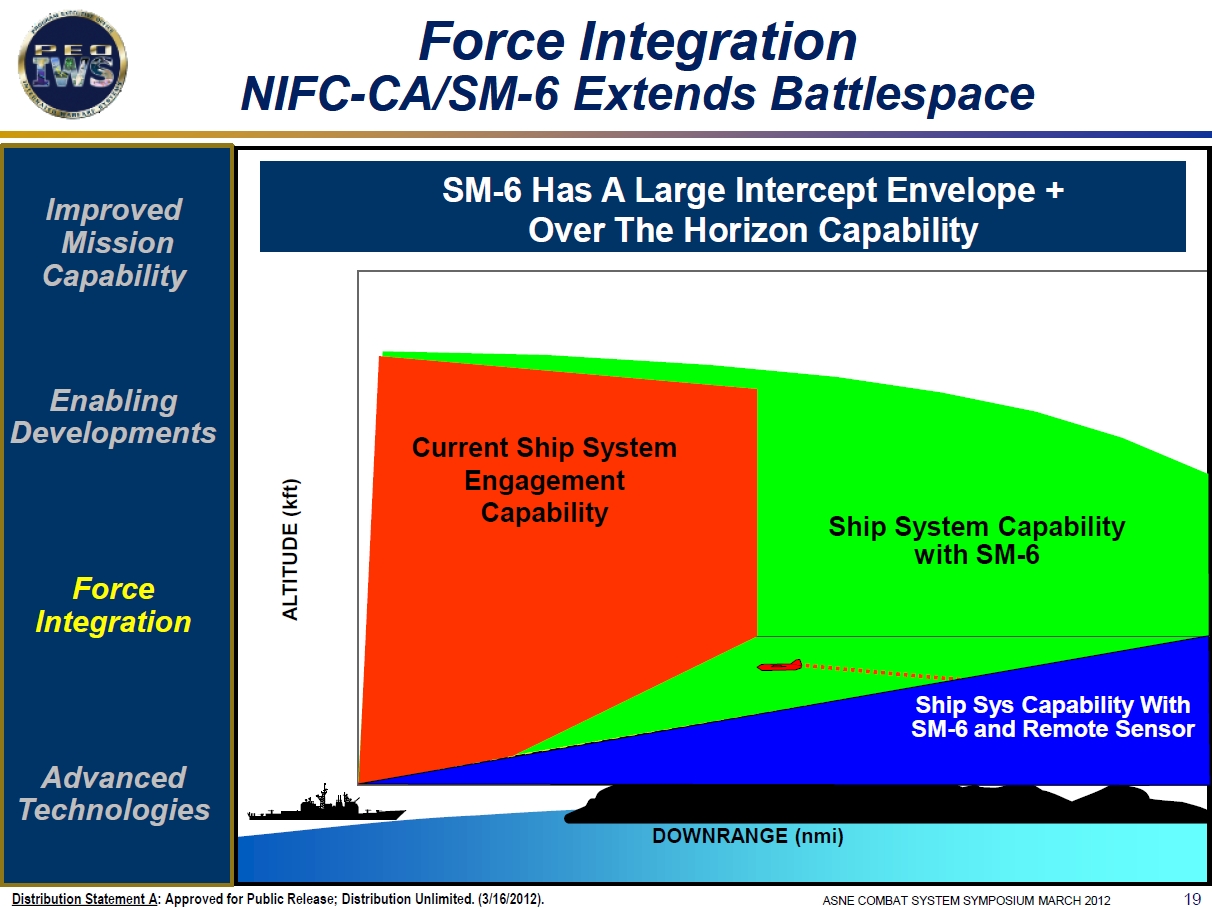
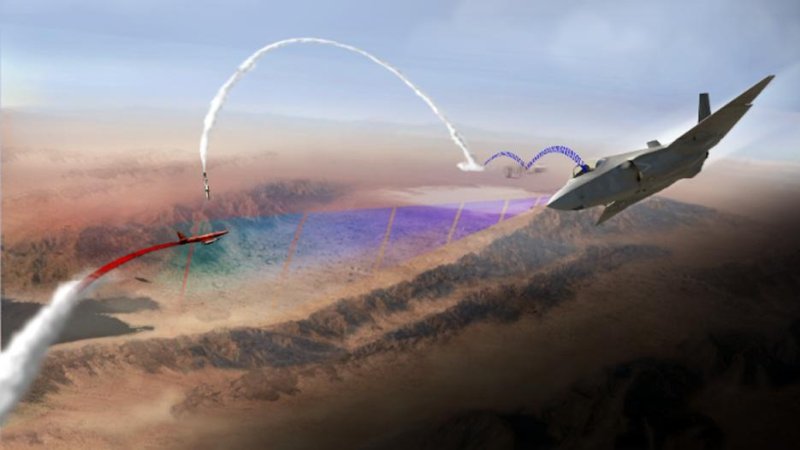
WASHINGTON (NNS) -- During the Naval Integrated Fire Control - Counter Air (NIFC-CA) test, USS Princeton (CG 59), equipped with the latest Aegis Baseline 9, successfully processed data from a remote airborne sensor to engage and destroy an over-the-horizon threat representative target using Standard Missile-6 (SM-6).

This is not the first time that SM-6 has shattered its own distance record. The missile broke the previous long-range intercept record in January of this year onboard USS John Paul Jones at Pacific Missile Range Facility, a milestone it originally set in June of 2014.

This NIFC-CA test was the tenth consecutive successful live-fire test to demonstrate an over-the- horizon, engage-on-remote capability. This particular test also successfully validated the NIFC-CA from the sea kill chain concept.

US Navy achieves longest range surface-to-air intercept in naval history - FreshNews :FreshNews
POINT MUGU NAVAL STATION, Calif., Sept. 30, 2016 /PRNewswire/ — In the longest range surface-to-air intercept of its kind in naval history, a Raytheon Company (NYSE: RTN) Standard Missile-6 successfully destroyed an over-the-horizon, threat target.

The mission also demonstrated the combat capabilities that SM-6 brings to Naval Integrated Fire Control-Counter Air, an effort designed to link U.S. Navy ships and airborne sensors into a single network via Cooperative Engagement Capability. The SM-6 was fired from the USS Princeton (CG59), a U.S. Navy Cruiser equipped with the latest Aegis baseline 9 combat system.

The active radar and extended range of the 'smart missile' allow it to track and destroy over-the-horizon targets, out of sight of operators on deck.

“The multi-mission SM-6 is in a class of its own as it demonstrates its ability to go further, faster and counter more threats to offer maximum mission flexibility,” said Mike Campisi, Standard Missile-6

senior program director. “The missile's ability to defend against so many different threats makes it the go-to solution to meet modern fleet defense needs across the globe.”

This is not the first time that SM-6 has shattered its own distance record. The missile broke the previous long-range intercept record in January of this year, a milestone it set itself in June of 2014.

RIM-174 SM-6 Extended Range Active Missile (ERAM)
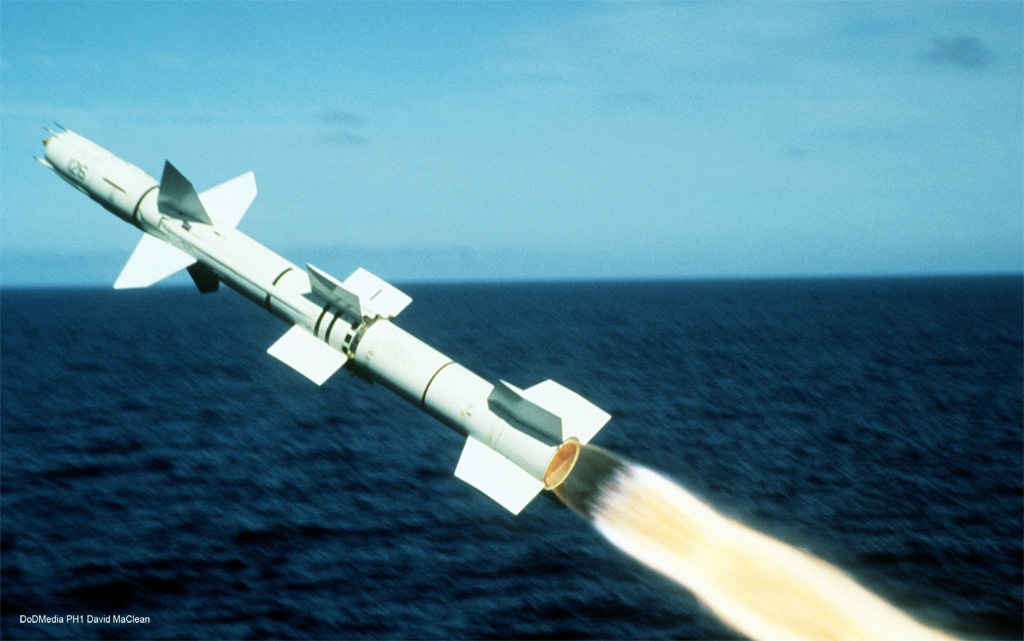
The Aegis/SM-2 is limited in handling saturation air attacks by the radar's horizon - low flying aircraft and cruise missiles could approach within dozens of miles of an AEGIS vessel before the SM-2 could conduct an intercept. With the SM-6, an AEGIS ship can target aircraft upwards of 200 miles away, before they can launch their Anti-Shipping Missiles.
The US Navy is seeking to adapt the Standard 6 (SM-6) missile for use against ships. If this modification is successful, the range of the SM-6 will be increased from 250 km to 370 km. This is a new anti-ship mode that can shoot down airborne threats, and now the same missile can attack and destroy a ship at long range. The Navy wanted to spend $2.9 billion over the five years FY17-FY22on the modified SM-6 as part of its “distributed lethality” initiative. This new anti-ship mode makes the SM-6 highly lethal due to its speed and agility and nearly overnight doubles the purpose of every such missile used across our fleet of Aegis destroyers. Boeing’s (BA) Harpoon anti-ship missile has a range of about 67 nautical miles, less than 130 km.

Related/Background:


Saturday, October 1, 2016

International Consortium offers Re-leased Do328 solution to the South African AF for maritime patrol

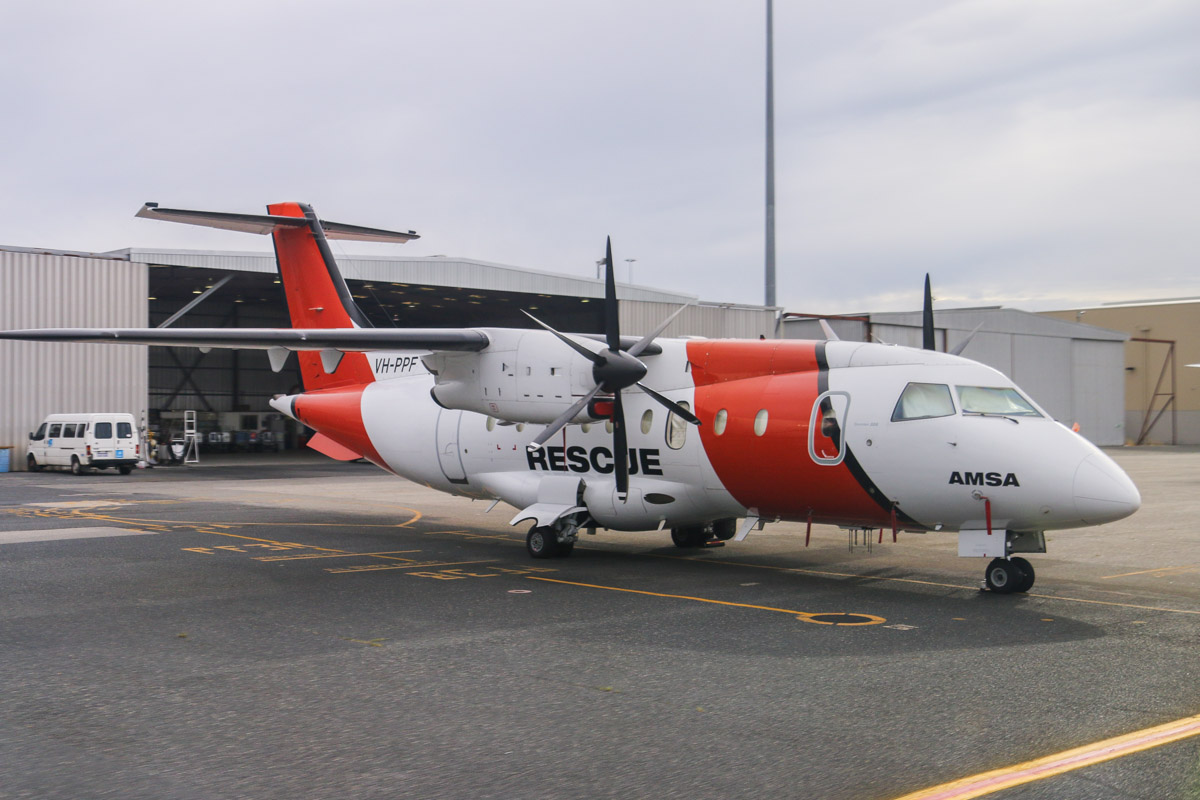
AeroRescue operates a fleet of five Dornier 328 turboprops with one aircraft each based at Perth, Darwin, Cairns, Brisbane and Melbourne. The aircraft are modified for SAR (Search And Rescue) and operate under a 10-year contract to the Australian Maritime Safety Authority (AMSA), using RESCUE callsigns – VH-PPF is ‘RESCUE 461’. When not used for SAR duties, the aircraft are also used for pollution detection and by Customs / Border Protection for maritime suveillance duties, using CUSTOMS callsigns.
Photo © David Eyre
Atlantis Aviation leads consortium at AAD | Atlantis Corporation
Atlantis demonstrates interim maritime surveillance solution to the SAAF | defenceWeb
Atlantis Aviation leads consortium at AAD | Atlantis Corporation
The aircraft offered by the Atlantis consortium is the Dornier 328-100 (Mod 20) operated by AeroRescue of Australia on behalf of the Australian Maritime Safety Authority (AMSA). The ten year contract with AMSA for search and rescue services is progressively tailing off as the new tenderer is utilising the longer ranged Challenger 604.

Apart from Atlantis, which act as Project Managers, the consortium includes South Africa’s Avex Air (providing maintenance), AeroData of Germany (sensors and equipment) and AeroRescue (the current aircraft owners, providing search and rescue services for Australia). The South African companies would own 51% of the new company which will take over ownership of the aircraft from AeroRescue.


IAI-Elta EL/M-2022A Radar
FLIR Systems
Star Safire III E/O Ball
The Dorniers are currently equipped with a second-generation STAR Safire III IR/digital TV FLIR electro-optical ball and the  IAI-Elta EL/M-2022(V)3 multi-mode search radar. This radar, which is rumoured to have been fitted to the SAAF’s Cheetah C fighter prior to being replaced by the Gripen, has been optimised for small contacts in high sea states. Besides various search, navigation, weather, air-to-air and moving target modes, it is capable of Spot-SAR (Synthetic Aperture Radar) and Strip map SAR mapping capability. The ISAR (Inverse Synthetic Aperture Radar) and Circular Synthetic Aperture Radar (CSAR) capabilities allow crew members to view a 3D picture at long distances from the target.

Other systems include digital satellite communication, enhanced navigation and AIS transponders fully integrated into an AeroData Mission Management System that allows for data transfer and full digital recording of all mission data, voice, video and data for a comprehensive evidence trail.

The airframe itself has been modified to incorporate large observer windows, an operator console and an airdrop capability. The modified inflight opening door can dispatch life rafts, self-locating datum marker buoys (SLDMB) and a variety of other containers stocked with food, water, medical supplies and communications equipment.

Gordon Blackbeard, Chairman of Atlantis, said that they were originally “looking at a very cheap and cheerful interim solution” based on the King Air 350ER. Despite the SAAF already operating earlier versions of the King Air, Atlantis felt that the good range of the King Air was offset by the lack of crew comfort and limited stores carriage capability.