Friday, July 21, 2017

GA-ASI flies Due Regard Radar - Boeing and Rockwell Collins on Collision Course with Patents

Due Regard Radar (Developmental)
GA-ASI is currently partnered with the FAA, NASA, and several industry partners to mature a DAA capability onboard NASA's Ikhana RPA. The FAA is developing a collision avoidance algorithm specifically for RPA, called ACAS XU, which uses the GA‑ASI DRR to detect and track non-cooperative aircraft.
Features/Benefits:
  • High-performance, actively electronically scanned array antenna
  • Air-cooled antenna and radar electronics assembly
  • Detects and tracks any aircraft in FOV regardless of equipment onboard
  • Feeds tracks through DAA system to remote pilot
  • Enables due regard operations in international airspace
  • Facilitates full and safe integration of RPA into the U.S. National Airspace System (NAS)

Predator demos sense-and-avoid system with first air-to-air radar -- Defense Systems
Drone maker General Atomics Aeronautical Systems said it has flight-tested an early version of a "sense-and-avoid radar" function mounted on its MQ-9 Predator B drone.
The company also said an extended range version of the MQ-1 Predator set a new record Predator endurance record earlier this month, remaining aloft for nearly two days during an endurance flight test.
The sense-and-avoid flight test, a pre-production version of the "Due Regard Radar," was billed as the first air-to-air radar mounted on a remotely piloted aircraft capable of meeting the requirements for "due regard" operations in international airspace. Due regard radars are equipped with automatic collision avoidance and sensor fusion capabilities designed to provide operators with improved situational awareness.

Boeing Patent

United States Patent Application: 0170205505
Application # 2017/0205505. Due Regard Radar System - Patents.com
United States Patent Application 20170205505
Kind Code A1
Heumphreus; Paul R. ;   et al. July 20, 2017

Due Regard Radar System

Abstract

A radar system may include a first radar array including a plurality of first radiating elements, and a second radar array including a plurality of second radiating elements, wherein the first radar array and the second radar array include a combined field of coverage of at least .+-.110 degrees in an azimuth plane and at least .+-.15 degrees in an elevation plane.
Inventors: Heumphreus; Paul R.; (Saint Peters, MO) ; Martin; Michael K.; (Redondo Beach, CA) ; Corrao; Giovanni; (St. Charles, MO) ; Shifflett; James A.; (Hazelwood, MO) ; Granger; Jamaal H.; (St. Charles, MO) ; Young; Roger K.; (O'Fallon, MO) ; Bristol; Timothy R.; (Orange, CA) ; Newton; Miles E.; (Irvine, CA)
Applicant:
Name City State Country Type

The Boeing Company

Chicago

IL

US
Family ID: 1000002080152
Appl. No.: 15/001438
Filed: January 20, 2016

Rockwell Collins Patent

United States Patent: 9568602
US Patent for Radar system and method of due regard/detect and avoid sensing and weather sensing Patent (Patent # 9,568,602 issued February 14, 2017) - Justia Patents Search

AFFORDABLE COMBINED PULSED/FMCW RADAR AESA - Rockwell Collins, Inc.

AFFORDABLE COMBINED PULSED/FMCW RADAR AESA
 
Patent US9568602 - Radar system and method of due regard/detect and avoid sensing and weather ... - Google Patents 
Abstract
A radar system and a method can utilize a radar antenna, such as, an active electronically scanned array antenna. The radar system can include a processor configured to scan a volume of space via the radar antenna to detect aircraft threats and to detect weather threats. The processing system can utilize a first pattern to detect the aircraft threats or obstacles and a second pattern to detect the weather threats.
Publication numberUS9568602 B1
Publication typeGrant
Application numberUS 14/498,539
Publication dateFeb 14, 2017
Filing dateSep 26, 2014
Priority dateSep 26, 2014
InventorsScott W. Stadelmann, 5 More »
Original AssigneeRockwell Collins, Inc.
Export CitationBiBTeX, EndNote, RefMan
External Links: USPTO, USPTO Assignment, Espacenet

Related/Background:

Sunday, July 16, 2017

Adm Thomas M Dykers - man behind "The Silent Service"

Adm Thomas Michael Dykers (1905 - 1975)
Rear Adm. Thomas M. Dykers, a World War II submarine captain who retired from the Navy and wrote and produced the weekly television series “Silent Service,” died Friday at the age of 69.
The winner of two Navy Crosses and a Silver Star, he commanded the submarine Jack, which sank eight ships in combat during World War II. He retired in 1949.

S-35
Thomas Michael Dykers was born December 3, 1905 in New Orleans, Louisiana. He graduated from the U.S. Naval Academy at Annapolis, Class of 1927. In 1934, he served as a Lt (jg) aboard the submarine u s s S-15. From February 1928 into 1935, S-15 served in the Panama Canal area, although she visited Baltimore, Maryland, from 15 May to 5 June 1933. She departed Coco Solo on 11 January 1935 for Philadelphia, Pennsylvania, where she decommissioned on 26 April 1935. He sailed to Honolulu on the Malolo in 1937 to assume his first command, the S-35, from 18 June 1937 to August 1941. USS S-35 (SS-140) was an S-class submarine of the United States Navy. Her keel was laid down on 14 June 1918 by the Bethlehem Shipbuilding Corporation in San Francisco, California. She was launched on 27 February 1919 and commissioned on 17 August 1922. In May 1932, she arrived at Pearl Harbor where she joined the Pacific Fleet and commenced a schedule of exercises, overhauls, and fleet problems which took her into the 1940s. In April 1941, she was transferred to San Diego, California, and, for the remaining months of peace, she provided services for the West Coast Sound School.


USS Jack, SS-259
 As a Lieutentant Commander, USN, Thomas Michael Dykers, was the first CO of the U.S.S. JACK (SS-259) from  6 Jan 1943 to 25 May 1944. On 25 Apr 1943 the USS Jack under his command departed New London, Connecticut for the Panama Canal Zone. On 2 May 1943, the boat transited the Panama Canal, then arrived at Pearl Harbor from New London 7 May 1943.

On the FIRST War Patrol of that submarine during the period 5 June 1943 to 19 July 1943, in waters off the coast of Honshu, Japan. Commander Dykers led attacks on the enemy and succeeded in sinking or damaging a large amount of hostile shipping. The Pacific Fleet Board Awarded him the Navy Cross September 9, 1943. Key events of the patrol included:
  • 5 Jun 1943 -USS Jack (Lt.Cdr. T.M. Dykers) departed from Pearl Harbor for her 1st war patrol. She was ordered to patrol off Honshu in Japanese home waters.
  • 26 Jun 1943 -USS Jack (Lt.Cdr. T.M. Dykers) torpedoed and sank the Japanese troop transports Shozan Maru (5859 GRT) and Toyo Maru (4163 GRT) off Hachijo Jima, southern Honshu, Japan, in position 33°22'N, 138°56'E. Jack is damaged during a Japanese air attack but continues her patrol. 
  • 4 Jul 1943 USS Jack (Lt.Cdr. T.M. Dykers) torpedoed and sank the Japanese army cargo ship Nikkyu Maru (6529 GRT) off the southeast coast of Honshu, Japan in position 34°33'N, 138°37'E. 
  • 19 Jul 1943USS Jack (Lt.Cdr. T.M. Dykers) ended her 1st war patrol at Pearl Harbor.

The second war patrol of the USS Jack was not as successful due to engine trouble.  On 5 Sep 1943, USS Jack (Lt.Cdr. T.M. Dykers) departed from Pearl Harbor for her 2nd war patrol, ending 10 Oct 1943 at Pearl Harbor. She is now sent to the Mare Island Navy Yard to solve the problems with her engines and general overhaul.


He was awarded  a Gold Star in lieu of a Second Award of the Navy Cross April 24, 1944 for his actions on the THIRD War Patrol of that submarine during the period 16 January 1944 to 13 March 1944, during operations against enemy Japanese shipping in the Pacific War Area. He maneuvered into striking position and launched attacks sinking a total of seven Japanese ships, including four large tankers. Then, he withdrew the JACK from the combat area without damage despite strong hostile countermeasures. Key events of the third war patrol include:
  • 16 Jan 1944 - USS Jack (Lt.Cdr. T.M. Dykers) departed from Pearl Harbor for her 3rd war patrol. She was ordered to patrol in the South China Sea.
  • 19 Feb 1944 - While operating in the South China Sea about 300 nautical miles west of Luzon, Philippines USS Jack (Lt.Cdr. T.M. Dykers) torpedoed and sank the Japanese merchant tankers Kokuei Maru (5154 GRT) and Nanei Maru (5019 GRT) in position 14°34'N, 114°11'E, Nichirin Maru (5162 GRT) in position 15°40'N, 115°48'E, and Ichiyo Maru (5106 GRT) in position 15°46'N, 115°57'E.
  • 13 Mar 1944 - USS Jack (Lt.Cdr. T.M. Dykers) ended her 3rd war patrol at Fremantle, Australia.

He was awarded the Silver Star July 31, 1944 for conspicuous gallantry and intrepidity as Commanding Officer of the U.S.S. JACK (SS-259), on the FOURTH War Patrol of that submarine in enemy Japanese-controlled waters, during the period 6 April to 10 May 1944. Maneuvering his ship after it had been bombed by a hostile patrol plane on 25 April, Captain Dykers launched three night attacks against a heavily-escorted enemy convoy to damage severely five Japanese freighters, probably sinking four of them. Patrolling the eastern approaches to Balintang Channel, he destroyed a Japanese trawler by gunfire, capturing two passengers and, the next day, destroyed another trawler. Key events of this patrol include:
  • 6 Apr 1944 - USS Jack (Lt.Cdr. T.M. Dykers) departed from Fremantle for her 4th war patrol. She was ordered to patrol in the South China Sea.
  • 26 Apr 1944 - While operation off the west coast of Luzon, Philippines USS Jack (Lt.Cdr. T.M. Dykers) torpedoed and sank the Japanese troop transport Yoshida Maru No.1 (5425 GRT) in position 18°06'N, 119°40'E, and torpedoed and damaged the Japanese army cargo ship Wales Maru (6586 GRT) in position 18°14'N, 119°53'E.
  • 28 Apr 1944 - USS Jack (Lt.Cdr. T.M. Dykers) sank a Japanese trawler with gunfire east of Luzon, Philippines in position 17°34'N, 124°06'E.
  • 10 May 1944 - USS Jack (Lt.Cdr. T.M. Dykers) ended her 4th war patrol at Fremantle.


After after 22 years of service, in 1949 he retired as a U.S. Navy Rear Admiral, he lived in Groton Connecticut. After retirement, he developed various media projects related to the submarine service and served as a technical expert to hollywood. He was a producer and writer, known for Captain Fathom (1955), Captain Fathom (1965) and Flat Top (1952).

His most well known project was the program "The Silent Service".  The TV series The Silent Service (1957) was based on the exploits of his and other submarines during World War II and the Korean War; he was also the executive producer, narrator and sometimes writer of the series. Every episode was fact based and the realism of the show was elevated by the use of actual combat footage from the files of the United States Navy. The Navy loaned him the U.S.S. Sawfish for the filming of several episodes.

The stories, which varied between the South Pacific during World War II, the Atlantic campaign and the Korean War, were the brainchild of Rear Admiral Thomas M. Dykers, himself a submariner, who retired from the Navy in 1949 after 22 years of service. Admiral Dykers also did an intro piece for each episode, narrated the action and filmed a closing segment, usually with a member of the crew of the submarine that was highlighted on that particular episode.

He died June 13, 1975

Related/Background:

Sunday, July 9, 2017

#ProstateCancer News - 2017-07

Prostate Cancer News - 2017-07

General News

About prostate cancer research, cases and public awareness:

Case Management

Highlights from ASCO 2017 in prostate cancer
Planning a campaign against prostate cancer:

Life Choices

can influence the odds in your favor:

Diet

can starve the cancer
  • nothing new yet 

Exercise

can give you strength to fight the cancer and treatment side effects

Screening and Diagnosis

early detection is important because symptoms appear too late for treatment:

Biopsies and Pathology

Genomics

Tests

  • nothing new yet  

Imaging

Treatment

Active Surveillance AS

Surgery RP

frequently the first choice for localized PCa, robotic assist dominates:

Radiation RT

Hormone ADT

Chemo


Immunotherapy

New Techniques

Side Effects

Advanced/Recurrence


Tuesday, July 4, 2017

Prostate Cancer ADT Drugs on FDA watch list

New considerations for ADT in advanced prostate cancer and the emerging role of GnRH antagonists
Lupron, Estradiol and the Mitochondria: A Pathway to Adverse Reactions
- Hormones Matter
New FDA Watch List Flags More Drugs

The US Food and Drug Administration (FDA) spotted possible safety blips on its radar for 14 drugs or drug classes in the first 3 months of 2017, which put them on the agency's latest watch list.

The watch list, posted last week on the FDA website, reflects potential signals of serious risk or new safety information gathered by the FDA Adverse  Event Reporting System (FAERS).


The FDA notes that a drug's appearance on a quarterly FAERS watch list does not mean that the agency has determined a causal relationship between the drug and the adverse event. What it does mean is further study. If the FDA concludes that there is a causal link, it can collect more data to better describe the risk, change the drug's label, order a risk evaluation and mitigation strategy, or pull the product from the market.

Lupron, Estradiol and the Mitochondria: A Pathway to Adverse Reactions- Hormones Matter
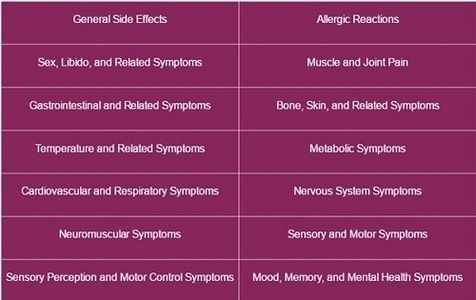
Adverse events have been reported when Lupron and other Gonadotropin-releasing hormone agonists have been used for non-prostate cancer cases such as premature puberty and female issues.Leuprolide, more commonly known as Lupron, is the GnRH agonist prescribed for endometriosis, uterine fibroids, cysts, undiagnosed pelvic pain, precocious puberty, during infertility treatments, to treat some cancers, and a host of other off-label uses. It induces a chemical castration in both women and men. In women, Lupron stops menstruation and ovulation and crashes endogenous estradiol synthesis rapidly and completely, inducing menopause and menopause-associated symptoms like hot flashes, sweats and osteoporosis, to name but a few. In men, where it is used as a treatment for prostate cancer, it prevents the synthesis of testosterone, pharmacologically castrating its users and evoking a similar constellation of symptoms.

Related/Background


Product Name: Trade (Active Ingredient) or Product Class Potential Signal of a Serious Risk/New Safety Information Additional Information (as of June 30, 2017)


Gonadotropin-releasing hormone agonists
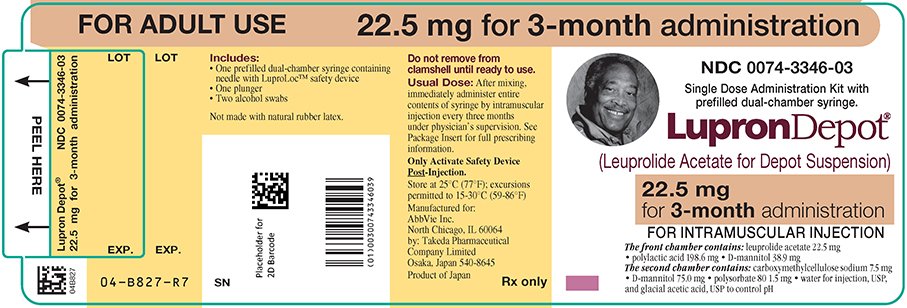
 Lupron (leuprolide acetate) injection

Lupron Depot PED (leuprolide acetate for depot suspension), injection, powder, lyophilized, for suspension

Supprelin LA (histrelin acetate) subcutaneous implant

Synarel (nafarelin acetate) nasal solution

Musculoskeletal and connective tissue pain and discomfort FDA is evaluating the need for regulatory action.

Saturday, June 24, 2017

Pick a Strategy for Survival with Kaplan-Meier Procedure

Oncological outcomes following radical prostatectomy for patients with pT4 prostate cancer
The Kaplan–Meier estimator,[1][2] also known as the product limit estimator, is a non-parametric statistic used to estimate the survival function from lifetime data. In medical research, it is often used to measure the fraction of patients living for a certain amount of time after treatment. The estimator is named after Edward L. Kaplan and Paul Meier, who each submitted similar manuscripts to the Journal of the American Statistical Association. The journal editor, John Tukey, convinced them to combine their work into one paper, which has been cited about 50,000 times since its publication.[4][5]
Kaplan-Meier estimate of time to progression (TTP) on androgen deprivation therapy (ADT)
according to whether or not patients received ADT as part of their local therapy.
Efficacy of androgen deprivation therapy (ADT) in patients with advanced prostate cancer: Association between Gleason score, prostate-specific antigen level, and prior ADT exposure with duration of ADT effect
The purpose of this study was to compare predictive factors for the efficacy of androgen deprivation therapy (ADT) in men with hormone-sensitive prostate cancer (HSPC) either with (M+) or without (M-) metastases. A cohort of prostate cancer patients was identified from a medical oncology practice treated with ADT for presumed nonlocalized prostate cancer, evaluated the efficacy of ADT using prostate-specific antigen (PSA) time to progression (TTP) and compared factors associated with TTP in M- and M+ patients. In this 553 patient cohort 51% were M- and 49% M+. The median TTP on ADT for the M- group was 33.2 months, versus 15.9 months in the M+ group (P<.0001). In multivariate analyses, lower biopsy Gleason score (GS), the absence of metastases, and lower serum PSA at ADT initiation all were associated with the efficacy of ADT. The association between GS and TTP was confined to M+ patients, whereas the association between PSA at ADT initiation and TTP was confined to M- patients. Use of ADT as part of local treatment was associated with a shortened TTP in both groups (hazard ratio [HR], 1.45, 95% confidence interval [CI], 1.10-1.91). In this large, retrospective study of HSPC patients in a medical oncology practice treated with ADT for nonlocalized prostate cancer, we found factors predicting efficacy of this treatment differed based on whether metastases were present at ADT initiation. The use of ADT as a part of local therapy was associated with a significantly decreased TTP, regardless of metastatic disease status
Efficacy of androgen deprivation therapy (ADT) in patients with advanced prostate cancer: Association between Gleason score, prostate-specific antigen level, and prior ADT exposure with duration of ADT effect.
Available from: https://www.researchgate.net/publication/5559661_Efficacy_of_androgen_deprivation_therapy_ADT_in_patients_with_advanced_prostate_cancer_Association_between_Gleason_score_prostate-specific_antigen_level_and_prior_ADT_exposure_with_duration_of_ADT_eff [accessed Jun 24, 2017].


Understanding survival analysis: Kaplan-Meier estimate
Kaplan-Meier estimate is one of the best options to be used to measure
the fraction of subjects living for a certain amount of time after
treatment. In clinical trials or community trials, the effect of an
intervention is assessed by measuring the number of subjects survived or
saved after that intervention over a period of time. The time starting
from a defined point to the occurrence of a given event, for example
death is called as survival time and the analysis of group data as
survival analysis. This can be affected by subjects under study that are
uncooperative and refused to be remained in the study or when some of
the subjects may not experience the event or death before the end of the
study, although they would have experienced or died if observation
continued, or we lose touch with them midway in the study. We label
these situations as censored observations. The Kaplan-Meier estimate is
the simplest way of computing the survival over time in spite of all
these difficulties associated with subjects or situations. The survival
curve can be created assuming various situations. It involves computing
of probabilities of occurrence of event at a certain point of time and
multiplying these successive probabilities by any earlier computed
probabilities to get the final estimate. This can be calculated for two
groups of subjects and also their statistical difference in the
survivals. This can be used in Ayurveda research when they are comparing
two drugs and looking for survival of subjects.

Kaplan-Meier Procedure | Real Statistics Using Excel

The goal of the Kaplan-Meier procedure is to create an estimator of the survival function based on empirical data, taking censoring into account.
Topics:

For those with a calculus background, you can also see the proofs of some of the properties described on the above webpages at
 Published on Jun 20, 2015

Learn Data Viz - https://www.udemy.com/tableau-acceler...

Github link where you can download the pluginhttps://github.com/lukashalim/ExcelSurvival


zzzzzzzz

Friday, June 9, 2017

#ProstateCancer News - 2017-06

Prostate Cancer News - 2017-06

General News

About prostate cancer research, cases and public awareness:

Case Management

Planning a campaign against prostate cancer:

Life Choices

can influence the odds in your favor:

Diet

can starve the cancer

Exercise

can give you strength to fight the cancer and treatment side effects

Screening and Diagnosis

early detection is important because symptoms appear too late for treatment:

Biopsies and Pathology

Genomics

Tests

Imaging

Treatment

Active Surveillance AS

Surgery RP

frequently the first choice for localized PCa, robotic assist dominates:

Radiation RT

Hormone ADT

Chemo


Immunotherapy

New Techniques

Side Effects

Advanced/Recurrence


Tuesday, June 6, 2017

May 2017 IPCSG Meeting - Survivor Case Histories

May 2017 IPCSG Meeting -


DVD’s of our meetings are available in our library for $10ea. Refer to the index available in the library. They can also be purchased through our website: http://ipcsg.org Click on the ‘Purchase DVDs” button. The DVD of each meeting is available by the next meeting date. They now include the slides.

 Member Stories
Dan Salas is a 66 year old attorney in San Diego.  He had a twelve-needle biopsy last June after his PSA reached 8.  There was a Gleason 3+3 score in 10% of a single core.  In November he was biopsied again, which gave 3+4 in 4% of a core with 36% 3+3, and two other cores with some 3+3.  His urologist wanted him to choose surgery or radiation within three months.
His personal path of investigation brought him to the IPCSG, and he was referred to Bernadette Greenwood of Desert Medical Imaging to learn about options.  She recommended getting an MRI.
An MRI (with 3 Tesla magnet from Siemens, said to be the best) at UCLA found no measurable cancer.  Note that Gleason 6 tumors may not be detected, and are generally not considered serious.  Dr. Schwartzberg here in San Diego reviewed the images and confirmed the conclusion.
He has a large prostate, of about 144 grams.  He is unsure about next steps, whether he should continue on active surveillance and just deal with the BPH, get a new doctor, and so forth.
He recommends PSA monitoring, which worked for him.  He feels the MRI was very valuable, and comforting about his situation.
Q: How is he dealing with the symptoms from his large prostate?  Flomax worked very well for a number of years, but then stopped working.  Now, Uroxatral is working for him.  There are other similar drugs that are approved for use with BPH.  Daily use Cialis is said to reduce the size of the prostate.
Comment:  Zinc and pumpkin seeds are said to help with BPH.
Q:  What about the Prolaris test?  It was done on Dan’s biopsy last June, and it was consistent with the Gleason score (i.e., it predicted little danger of death within ten years).
Comment:  Avodart for 6-12 months can shrink the prostate.  The new Mayo clinic in Phoenix is said to resolve BPH urinary problems without side effects by surgery.
Comment:  One participant favors doing a yearly biopsy.  (yeouch!  How about MRI instead?)  The participant also suggests surgery or proton beam treatment.
Q:  Frequency of his PSA tests?  Every four months.
Bill Manning will soon be 65 years old, and is a videographer.  His current PSA is 7.7.  He needs to urinate 1-2X per night.  He found out about his elevated PSA as part of an insurance application in 2009, when his PSA was found to be 4.1.  His application was refused, as he was not considered a good risk.  A retest at Kaiser came out at about 6.  So he underwent a 12-core biopsy, and 5% of one core was 3+3.  His stage was T1c (localized early-stage disease of relatively low risk).  Surgery was recommended, with radiation as an alternative.  His wife wanted him to undergo surgery right away.  He chose to do some research.  A support group at Kaiser was helpful, but then he learned about the IPCSG, and has attended since 2009.  He learned about Dr. Duke Bahn, and got a Color Doppler ultrasound scan.  Dr. Bahn put him on active surveillance and rechecked in 6 months; Bill was still fine.
Dr. Bahn in 2013 wanted a biopsy (His 1st urologist said biopsy yearly; his 2nd said only needed after a change), since it had been four years since the original biopsy.  Color Doppler ultrasound showed a change this time.  So Bill agreed to a 7-core targeted biopsy.  All the cores appeared to be negative.  To get a second opinion, Bill chose to send the cores to Kaiser!  Even they were surprised, since many of their patients insist on second opinions elsewhere.  But Bill reasoned that they had the original samples from 2009 to compare.  They agreed the new biopsy was negative.
Bill has chronic prostatitis and BPH (65 grams in 2009; 89 grams in 2015).  So his PSA was climbing due to that.  He’s been told that his PSA would be normal if 7-9, based on the size of his prostate.
Bill got an MP-MRI scan done in 2015 by Dr. Schwartzberg of Imaging Healthcare Specialists, and it showed negative results.  Dr. Schwartzberg said that active surveillance was fully appropriate for him.  His PI-RADS score was 2 (which is relatively low).
Overall, he's “very low risk.”  So no treatment of any kind is needed at this time, and he has had none so far.  He did change his diet.  Perhaps his first biopsy was a false positive, and surgery could have been a terrible mistake.  Another MRI is planned for this summer.
He feels the IPCSG has been a super-important factor in his life.  It’s too hard to sort through what's on the internet.  It's more digestible in the presentations here.  It really lowers the anxiety.
Q:  How is the size of the prostate measured?  Ultrasound or MRI.
Q:  Ever treated for prostatitis infection?  No.
Q:  Diet?  Available by contacting him after the meeting.
Q:  Ever follow up with his original surgeon about the lack of need for a radical prostatectomy?  No, but in 2009, the apparently eagerness of the surgeon to operate on him disturbed both his wife and him, so was a motivation to learn more before going back -- and he never returned to that doctor.
Q:  Pharmaceuticals taken?  No, but tried Saw Palmetto with no effect.  Now trying Stinging Nettle root.  Someone else tried Super Beta Prostate, but didn't see a discernible effect.
Comment:  Treatment for chronic prostatitis should be 3 months of antibiotics.  Reply:  Bill would be reluctant to take that much antibiotics, since he doesn't have an obvious raging infection.
Comment from George Johnson:  Take your wife with you when you meet with doctors for discussions.  She will hear things you miss.

Jack Harrison, age 87, small manufacturing business owner in Rancho Bernardo.  Coming to IPCSG for 10 years.
Current status:  PSA 2.9, Gleason = 9, Bone metastases in the spine and ribs and hip.  Taking Zytiga, Lupron, Casodex and Metformin.  Feeling very good, with positive outlook.
His diagnosis came in 1990 from his general practitioner's digital rectal exam.  His PSA was then measured at 20.  Biopsy showed Gleason = 6.  Urologist recommended surgery.  He studied options at the UCSD basement library, interviewed a radiologist and another surgeon, then underwent surgery.  Quick recovery, and resumed work -- but major negative effect on his sex life.  Post-surgery, the Gleason actual score was found to be 9 (5+4) with positive margins (i.e., bad news!).  The San Diego Tumor Board recommended radiation, and he had 6000 rads of EBRT, with no real side effects.  His insurance company dropped him after those treatments.
In March 1993, his PSA was still only 0.15, but it gradually rose.  His doctors didn't warn him about how serious it was that the PSA was rising.
In 1997, his PSA reached 8.9, and then he was (belatedly) put on Lupron and Casodex, causing the PSA to return to undetectable.  He had all the usual side effects of Lupron:  Tough on bones, loss of strength, slowing down, enlarged breasts, weight gain, and incontinence (in combo with prior surgery).
He heard about intermittent treatment at an early PCRI (Prostate Cancer Research Institute) meeting from Dr. Stephen Strum, tried it for 8-10 years and felt better.  As the PSA went up, he would use the drugs, and go off when the PSA went back down.  No urologist he saw would agree it was a good idea, but it worked for him.  Regained some vitality.
In 2011-2014, his PSA was rising again, and he started Leukine (for stimulating the immune system) with Cytoxan and Lupron.  In 2014, he had Provenge treatment while continuing Lupron and Casodex.  In 2016, he started Zytiga with Lupron and Casodex.  This year, he had focal IMRT on his spine, which seems to have cleared up the mets there.  Has some loss of strength and is slowing down a bit.  His current program involves a healthy diet, exercise and walking with his wife, a good spiritual program and keeping active and positive.  Current PSA = 3.  No pain.
He recommends reading and understanding the Partin Tables before any surgery.  That would have ruled out surgery in his case, since he had a high Gleason, positive margins and a high PSA.  Unfortunately, it wasn't known until after the surgery.  (Nowadays, MRI would give the needed information.)  He regrets having done the surgery with the limited info he had back then.
He recommends the PAACT magazine, which is free and has very good information.
Q:  Continued taking Lupron with other medicines added?  He managed his own Lupron dose until 2006, intermittently, sometimes being off it for a couple of years.  Since then, he has been on it continuously, even when other medications were added.
Comment from George Johnson:  Intermittent hormone therapy such as Jack used has been used successfully by others, but is not suggested by any doctors in San Diego that he is aware of.  He invited Bob Keck to share his 24-year experience:  He Had surgery in 1992.   After 4 years, his PSA started rising again. Dr. Bob Liebowitz from L.A. came to speak to the IPCSG and talked about intermittent hormone therapy.  His Gleason was 6 and his PSA was 21.  Ever since, he has intermittently used hormone therapy: first Lupron and Eulexin, then Casodex and Avodart, and more recently with added Metformin.  The Metformin greatly slows his PSA rise.  Now his PSA cycling from 0.1 to 6 takes about a year and a half, and then he goes back on the drugs.  In contrast, Gene Van Vleet only succeeded in taking a holiday from Casodex for 3 months.  George was successful for 4 years on Casodex intermittent use, but now takes it continuously.  He only took Lupron once.
Q:  Jack’s doctor?  Mark Scholz, of Prostate Oncology Specialists, since 2006.
Comment:  When your energy is down, try some American Ginseng.  (But Jack noted that it didn’t work for him.)