Saturday, September 24, 2016

Chinese announce quantum radar capability to detect stealth

Quantum radar can detect what’s invisible to regular radar
| ExtremeTech
China Claims It Developed "Quantum" Radar To See Stealth Planes
Beijing's state media has made the bold claim that a Chinese defense contractor successfully developed the world's first quantum radar system. The radar can allegedly detect objects at range of up to 62 miles. If true, this would greatly diminish the value of so-called "stealth" aircraft, including the B-2 and F-22 Raptor fighter. But it's a pretty far-out claim.
Quantum radar is based on the theory of quantum entanglement and the idea that two different particles can share a relationship with one another to the point that, by studying one particle, you can learn things about the other particle—which could be miles away. These two particles are said to be "entangled".
In quantum radars, a photon is split by a crystal into two entangled photons, a process known as "parametric down-conversion." The radar splits multiple photons into entangled pairs—and A and a B, so to speak. The radar systems sends one half of the pairs—the As—via microwave beam into the air. The other set, the Bs, remains at the radar base. By studying the photons retained at the radar base, the radar operators can tell what happens to the photons broadcast outward. Did they run into an object? How large was it? How fast was it traveling and in what direction? What does it look like?

Related/Background

  • Chinese Single-Photon Quantum Radar Makes the Invisible Visible, and U.S. Military Low-Observable/Stealth Aircraft Very Observable, Supposedly. Oh, My. | DefenseReview.com.
  • China Claims It Developed "Quantum" Radar To See Stealth Planes
  • Next Big Future: China claims to have successfully developed quantum radar and can easily detect stealth planes
  • Chinese Tech Breakthrough Could Make Stealth Technology Obsolete
  • China Presents Its New Radar Capable to Detect ‘Invisible’ Targets at Distance up to 100 Km 
  • SNAFU!: Chinese announce capability to detect stealth
  • The end of stealth? New Chinese radar capable of detecting ‘invisible’ targets 100km away | South China Morning Post
  • K. Lukin, "Quantum Radar vs Noise Radar," 2016 9th International Kharkiv Symposium on Physics and Engineering of Microwaves, Millimeter and Submillimeter Waves (MSMW), Kharkiv, 2016, pp. 1-4.
    • doi: 10.1109/MSMW.2016.7538137
    • Abstract: Preliminary results of the comparative analysis of Quantum Radar (QR) based upon quantum entanglement phenomenon and Noise Radar (NR) based upon classical coherence notion and correlation processing of random signals are presented in the paper. It has been shown that the basic idea of entangled multi-photon QR for simultaneous implementing of high penetrating ability of the entangled photons and high spatial resolution performance does not work because of decay of entangled state of the transmitted photons when they hits a wall, for example. QR operation abilities may be described in terms of classical physics. In addition, the multi-photon QR has been modeled by means of classically phase locked multi-frequency signals (regular and chaotic). Results of computer simulation of basic properties for such radar are presented.
    • CONCLUSIONS - Noise Radar was a “crystal dream” of radar engineers during several decades. Nowadays it works. Today Quantum Radar looks nonrealistic for the claimed long range applications, but it could be a promising approach in extremely near field applications. At the same time, since entanglement of two (or more) photons may be considered as a phase synchronized waves the same functions of Quantum Radar may be implemented with the help of classically synchronized (phase locked) waves of different frequencies. In this case a new type of QR may be introduced which exploits nonstationary nature of the entangled signals and may provide efficient detection of oscillating targets and in nonlinear radar implementations.
    • REFERENCES
      • [1] E. H. Allen and M. Karageorgis, “Radar Systems and Methods Using Entangled Quantum Particles,” US Patent 7375802, 2008.
      • [2] K. A. Lukin, “Noise radar technology,” Telecommunications and Radio Engineering, vol.55, no. 12, pp.8-16, Dec. 2001.
      • [3] K. A. Lukin, “Noise radar technology: the principles and short overview,” Applied Radio Electronics, vol. 4, no. 1, pp. 4-13, Dec. 2005.
      • [4] K. A. Lukin, “Sliding antennas for noise waveform SAR,” Applied Radio Electronics, vol. 4, no.1, pp. 103-106, Apr. 2005.
      • [5] K. A. Lukin, et al., “Ka-band bistaic ground-based noise wavefom SAR for short-range applications,” IET Proc. Radar Sonar & Navigation,vol.2, pp 233-243, Aug. 2008.
      • [6] M. I. Kolobov, Eds., Quantum Imaging. Springer, New York, 2007.
      • [7] S. Ragy and G. Adesso, “Nature of light correlations in ghost imaging” . Sci. Rep. 2, 651; DOI:10.1038/srep00651, 2012.
      • [8] D. Faccio, “Temporal ghost imaging,” Nature Photonics, vol. 10, pp 150–152, 2016.
      • [9] S. Lloyd, ”Enhanced Sensitivity of Photodetection via Quantum Illumination,” Science, vol. 321, pp 1463-1465, 2008.
      • [10] Si-Hui Tan, et al., “Quantum Illumination with Gaussian States,” Phys.Rev. Lett., vol. 101, p 253601, 2008.
      • [11] S. Barzanjeh, et al., “Microwave Quantum Illumination,” Phys. Rev.Lett., vol. 114, 080503, Feb. 2015.
      • [12] M. Lanzagorta, Quantum Radar, Morgan & Claypool, 2011.
      • [13] K. Lukin, et al., “FPGA Based Software Defined Noise Radar,” Applied Radio Electronics, vol. 12, no.1, pp.89-94, 2013.
      • [14] K. Lukin, et al., “MIMO Noise Radar with Signals Time-Division in Receive Channels,” in European Radar Conference, EuRAD-2015,Paris, France, 2015, pp 125 – 128.
      • [15] R. Glauber, “One Hundred Years of Light Quanta,” Harvard University,Nobel Lecture, Dec.8, 2005.
    • keywords: {radar signal processing;NR;QR;classical coherence notion;correlation processing;entangled photons;noise radar;phase locked multifrequency signals;quantum entanglement;quantum radar;random signals;transmitted photons;Correlation;Imaging;Photonics;Quantum entanglement;Radar imaging;Radar signal processing;3D imaging;coherent signals;entangled photons;noise radar;phase synchronization;quantum radar},
    • URL: http://ieeexplore.ieee.org/stamp/stamp.jsp?tp=&arnumber=7538137&isnumber=7537982
X. Jiang et al., "InP-Based Single-Photon Detectors and Geiger-Mode APD Arrays for Quantum Communications Applications," in IEEE Journal of Selected Topics in Quantum Electronics, vol. 21, no. 3, pp. 5-16, May-June 2015.
    • doi: 10.1109/JSTQE.2014.2358685
    • Abstract: To meet the increasing demand from quantum communications and other photon starved applications, we have developed various InP-based single-photon detectors, including discrete single-photon avalanche diodes (SPADs), negative feedback avalanche diodes (NFADs), and Geiger-mode avalanche photodiode (GmAPD) arrays. A large quantity of InP SPADs have been fabricated. Out of 1000 devices with a 25-μm active area diameter, operated under gated mode at temperature of 233 K, with a pulse repetition rate of 1 MHz and pulse width of 1 ns, the average dark count rate and afterpulsing probability are 30 kHz and 8 × 10⁻⁵, respectively. Smaller (16-μm active area diameter) and larger (40-μm active area diameter) discrete devices have been fabricated as well, and their performances are presented along with the 25-μm diameter devices. NFAD devices can operate in free running mode and photon detection efficiency of 10-15% can be achieved without applying any hold-off time externally. When the temperature decreases from 240 to 160 K, the noise equivalent power (NEP) decreasesfrom1.9 × 10-16 to 1.8 × 10⁻¹⁸WHz-1/2, with the activation energy being 0.2 eV. The very low NEP at 160 K makes NFAD devices an ideal choice for long distance, entanglement-based quantum key distributions. GmAPD arrays provide an enabling technology for many active optical applications, such as 3-D laser detection and ranging (LADAR) and photon starved optical communications. Both 32 × 32 and 128 × 32 GmAPD arrays have been fabricated with high performance and good uniformity. GmAPD focal plane arrays (FPAs) with framed readout mode have enabled very high-performance flash LADAR systems. GmAPD FPAs with asynchronous readout mode will enable high rate quantum key distributions and other quantum communications applications.
    • keywords: {Geiger counters;III-V semiconductors;avalanche photodiodes;focal planes;indium compounds;optical arrays;optical communication equipment;optical radar;photodetectors;quantum cryptography;quantum entanglement;quantum optics;3-D laser detection and ranging;Geiger-mode APD arrays;Geiger-mode avalanche photodiode arrays;GmAPD FPA;GmAPD arrays;GmAPD focal plane arrays;InP;InP SPAD;InP-based single-photon detectors;NEP;NFAD devices;activation energy;active area diameter;active optical applications;afterpulsing probability;asynchronous readout mode;average dark count rate;discrete single-photon avalanche diodes;enabling technology;entanglement-based quantum key distributions;framed readout mode;free running mode;frequency 30 kHz;gated mode;high rate quantum key distributions;high-performance flash LADAR systems;hold-off time;negative feedback avalanche diodes;noise equivalent power;photon detection efficiency;photon starved applications;photon starved optical communications;pulse repetition rate;pulse width;quantum communication applications;size 16 mum;size 25 mum;size 40 mum;temperature 233 K;temperature 240 K to 160 K;time 1 ns;Communication systems;Detectors;Logic gates;Performance evaluation;Photonics;Solids;Temperature measurement;APD array;Geiger mode;Single-photon avalanche photodiode (SPAD);laser detection and ranging (LADAR);negative feedback;quantum communications;quantum key distribution (QKD);short-wave infrared (SWIR)},
    • URL: http://ieeexplore.ieee.org/stamp/stamp.jsp?tp=&arnumber=6901204&isnumber=6862130
  • M. Lanzagorta, J. Uhlmann and S. E. Venegas-Andraca, "Quantum sensing in the maritime environment," OCEANS 2015 - MTS/IEEE Washington, Washington, DC, 2015, pp. 1-9.
    • Abstract: Quantum sensors exploit quantum phenomena to achieve performance advantages over their classical counterparts. Some examples of quantum sensing devices that we will briefly describe in this paper include quantum photo-detectors, radar, lidar, magnetometers, and gravimeters. We will highlight their novel features and discuss their potential applications to problems related to naval operations in the maritime environment.
    • The fundamental idea behind an entanglement-based standoff monostatic electromagnetic quantum sensor, either radar or lidar, is shown in Figure 1 and it is based on the concept of quantum illumination [8]. However, while quantum illumination thrives for increased sensing performance (how to detect better), our approach is more concerned with stealthy sensing operations (how to detect a target with some error probability, using the smallest possible number of photons) [16], [30], [31]. Monostatic sensing means that the detector and the emitter are in the same physical location. In the proposed sensing device, an entangled pair of photons is created. These are called the signal and the idler (or ancilla) photons. The idler photon is kept within the system while the signal photon is sent through a medium towards a potential target. With certain probability, the signal photon may, or may not encounter the target. If the signal photon does not encounter the target, then it will continue to propagate in space. In such a case all measurements performed by the detector will be of noise photons. On the other hand, if the target is present and the signal photon is “bounced back” towards the detector, then it will be detected with certain probability. In a sense, the signal photon is “tagged” because of the quantum correlations due to the entanglement, and therefore it will be “easier” to correctly identify it as a signal photon rather than misidentify it as a noise photon [11], [16], [30], [31].
      Electromagnetic quantum sensors are formally described using quantum field theory. As a consequence, the exact same theory applies to the physical description of quantum radar and quantum lidar. Of course, while the equations are the same, the frequency and frequency-dependent parameters will have different values in the microwave (radar) and optical (lidar) regimes. Also, the actual physical implementation of these devices will be different according to the frequency. However, the general features and performance advantages offered by electromagnetic quantum sensors are similar in both regimes.
       
    • keywords: {marine communication;gravimeters;lidar;magnetometers;maritime environment;quantum photo-detectors;quantum sensing;quantum sensing devices;quantum sensors;radar;Laser radar;Photonics;Quantum entanglement;Sensor phenomena and characterization},
    • URL: http://ieeexplore.ieee.org/stamp/stamp.jsp?tp=&arnumber=7401973&isnumber=7401802
  • C. Zhou, W. Qian and Y. Zhang, "Quantum information technology in radar system," Information Technology and Electronic Commerce (ICITEC), 2014 2nd International Conference on, Dalian, 2014, pp. 195-198.
    • doi: 10.1109/ICITEC.2014.7105600
    • Abstract: Quantum radar is a remote sensor that exploits quantum phenomena to perceive target in the distance and receive its state information. In this article, the concept and principle of quantum radar are introduced in detail, including interferometrie quantum radar, quantum ladar and quantum illumination radar. And it is proved in theory that quantum radar can beat standard quantum limitation and surpass classical radar.
    • keywords: {optical radar;quantum theory;radar interferometry;remote sensing by radar;interferometric quantum radar System;quantum illumination radar;quantum information technology;quantum ladar;quantum phenomena;remote sensor;Lighting;Quantum entanglement;Radar detection;Radar remote sensing;Receivers;Quantum information;quantum entanglement;quantum radar;quantum sensor},
    • URL: http://ieeexplore.ieee.org/stamp/stamp.jsp?tp=&arnumber=7105600&isnumber=7105555
  • P. Lin, Z. Yu and C. Li, "Review and forecast of quantum radar," Synthetic Aperture Radar (APSAR), 2013 Asia-Pacific Conference on, Tsukuba, 2013, pp. 432-433.
    • Abstract: The Radar is a kind of active remote-sensing device which has the abilities to detect and identify targets in all weathers. With the development of the radar system, the pursuit of higher SAR image quality makes the radar system more and more complicated so that the current radar systems need a revolution. Theoretical analyses show that a device processing quantum information has the potential to promote its sensitivity at utmost and the system performance would be increased as a result. This paper demonstrates the development history of quantum radar and predicts the feasibility of the quantum radar.
    • keywords: {object detection;remote sensing by radar;synthetic aperture radar;active remote-sensing device;device processing quantum information;higher SAR image quality;quantum radar development history;quantum radar feasibility prediction;quantum radar forecast;quantum radar review;radar system development;system performance;target detection;target identification;theoretical analyses;Photonics;Quantum entanglement;Radar cross-sections;Radar remote sensing;Sensitivity},
    • URL: http://ieeexplore.ieee.org/stamp/stamp.jsp?tp=&arnumber=6705108&isnumber=6704984
  • A. V. Kuznetsova, "Using quantum information theory in remote sensing systems," Antenna Theory and Techniques (ICATT), 2013 IX International Conference on, Odessa, 2013, pp. 518-520.
    • doi: 10.1109/ICATT.2013.6650832
    • Abstract: The using of major quantum properties in radio sensing systems is discussed. The influence of the main measurements features and the basic categories of quantum sensors are shown.
    • keywords: {information theory;quantum communication;quantum computing;quantum theory;radiocommunication;remote sensing;sensors;quantum information theory;quantum properties;quantum sensors;radio sensing systems;remote sensing systems;Photonics;Quantum computing;Quantum entanglement;Radar cross-sections;Sensors;Radar;quantum computing;quantum information;quantum radar;quantum sensors},
    • URL: http://ieeexplore.ieee.org/stamp/stamp.jsp?tp=&arnumber=6650832&isnumber=6650673
  • Y. Chen, H. Yang and H. Zhao, "Quantum radar technology and its developments," Communications, Circuits and Systems (ICCCAS), 2013 International Conference on, Chengdu, 2013, pp. 195-199.
    • doi: 10.1109/ICCCAS.2013.6765317
    • Abstract: Quantum metrology exploits quantum phenomena to improve the measurement sensitivity. Theoretical analysis shows that quantum measurement can break through the standard quantum limits and reach super sensitivity level. Quantum radar systems based on quantum measurement can fufill not only conventional target detection and recognition tasks but also capable of detecting and identifying the RF stealth platform and weapons systems. The theoretical basis, classification, physical realization of quantum radar is discussed comprehensively in this paper. And the technology state and open questions of quantum radars is reviewed at the end.
    • keywords: {military radar;radar detection;radar target recognition;weapons;RF stealth platform;measurement sensitivity;quantum measurement;quantum metrology;quantum phenomena;quantum radar technology;recognition task;standard quantum limits;super sensitivity level;target detection;weapons system;Lighting;Photonics;Quantum entanglement;Radar detection;Radar imaging},
    • URL: http://ieeexplore.ieee.org/stamp/stamp.jsp?tp=&arnumber=6765317&isnumber=6765270
  • M. Raybaut, A. Godard, A. K. Mohamed and M. Lefebvre, "Doubly resonant optical parametric oscillator: A generic transmitter architecture for DIAL," CLEO: 2011 - Laser Science to Photonic Applications, Baltimore, MD, 2011, pp. 1-3.
    • doi: 10.1364/CLEO_SI.2011.CTuD5
    • Abstract: Entangled cavity doubly resonant optical parametric oscillators are able to provide high peak power, single longitudinal mode emission, with wide tuning range and high frequency stability, which make them well suited for multi-specie DIAL.
    • keywords: {laser frequency stability;optical parametric oscillators;optical radar;optical transmitters;quantum entanglement;differential absorption LIDAR;doubly resonant optical parametric oscillator;entangled cavity;generic transmitter;high frequency stability;multispecie DIAL;single longitudinal mode emission;wide tuning range;Laser excitation;Laser radar;Nonlinear optics;Optical transmitters;Oscillators;Pump lasers;Tuning},
    • URL: http://ieeexplore.ieee.org/stamp/stamp.jsp?tp=&arnumber=5950592&isnumber=5950009
  • M. Raybaut et al., "Single longitudinal mode, 3 MHz frequency stable, 11mJ, type II doubly resonant OPO/OPA for CO2 DIAL," 2009 Conference on Lasers and Electro-Optics and 2009 Conference on Quantum electronics and Laser Science Conference, Baltimore, MD, 2009, pp. 1-2.
    • doi: 10.1364/CLEO.2009.CWC7
    • Abstract: For CO2 differential-absorption LIDAR, the single-mode output of a type-II PPLN entangled-cavity nanosecond doubly-resonant OPO emitting at 2.05 mum is amplified to 11 mJ, with 3 MHz rms frequency stability and a M2 < 1.9.
    • keywords: {high-speed optical techniques;lithium compounds;optical parametric amplifiers;optical parametric oscillators;optical radar;quantum entanglement;DIAL;LiNbO3;differential-absorption LIDAR;energy 11 mJ;entangled-cavity nanosecond doubly-resonant OPO;frequency 3 MHz;frequency stability;longitudinal mode;single-mode output;type II doubly resonant OPO-OPA;wavelength 2.05 mum;Energy states;Frequency conversion;Laser excitation;Laser radar;Laser tuning;Nonlinear optics;Optical amplifiers;Resonance;Stability;Stimulated emission;(190.1900) Diagnostic applications of nonlinear optics;(190.4970) Parametric oscillators and amplifiers},
    • URL: http://ieeexplore.ieee.org/stamp/stamp.jsp?tp=&arnumber=5224588&isnumber=5224262
  • S. Guha, "Receiver design to harness quantum illumination advantage," 2009 IEEE International Symposium on Information Theory, Seoul, 2009, pp. 963-967.
    • doi: 10.1109/ISIT.2009.5205594
    • Abstract: An optical transmitter that uses entangled light generated by spontaneous parametric downconversion (SPDC), in conjunction with an optimal quantum-optical receiver (whose implementation is not yet known) is in principle capable of obtaining up to a 6 dB gain in the error-probability exponent over the optimum-reception un-entangled coherent-state lidar to detect the presence of a far-away target subject to entanglement-breaking loss and noise in the free-space link . We present an explicit design of a structured quantum-illumination receiver, which in conjunction with the SPDC transmitter is shown to achieve up to a 3 dB error-exponent advantage over the classical sensor. Apart from being fairly feasible for a proof-of-principle demonstration, this is to our knowledge the first structured design of a quantum-optical sensor for target detection that outperforms the comparable best classical lidar sensor appreciably in a low-brightness, lossy and noisy operating regime.
    • keywords: {optical transmitters;quantum entanglement;SPDC transmitter;entangled light;entanglement-breaking loss;error-probability;free-space link;gain 6 dB;harness quantum illumination advantage;optical transmitter;optimal quantum-optical receiver;optimum-reception un-entangled coherent-state lidar;quantum-illumination receiver;quantum-optical sensor;receiver design;spontaneous parametric downconversion;target detection;Information processing;Laser radar;Lighting;Noise generators;Optical design;Optical receivers;Optical transmitters;Performance gain;Propagation losses;Quantum entanglement},
    • URL: http://ieeexplore.ieee.org/stamp/stamp.jsp?tp=&arnumber=5205594&isnumber=5205248


  • xxx

Friday, September 23, 2016

Israel Ofek 11 EO Satellite now functional after initial problems in orbit


Newly Launched Israeli Spy Satellite Transmits Back First Photographs - Israel News - Haaretz.com
Officials: Israeli Spy Satellite Working After Rocky Launch - ABC News
New Israeli intelligence satellite ‘sending back great images’ - Israel News - Jerusalem Post
More than a week after it was launched and ran into serious technical difficulties, the Ofek- 11 spy satellites began sending “great images” back to the ground control station, the Defense Ministry announced on Thursday evening.

Amnon Harari, head of the Space Administration in the Defense Ministry, and Ofer Doron, head of Israel Aerospace Industry’s MBT Space Division, said the satellite’s transponder and image broadcasting system began kicking in on Thursday, and that ground control officials were now seeing “operational results.”
Israel Launches Advanced Optical Reconnaissance Satellite – Spaceflight101
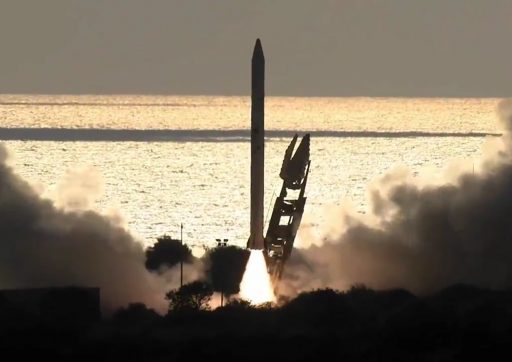
The Ofeq 11 satellite lifted off at approximately 14:30 UTC atop a Shavit-2 rocket blasting off from the Palmachim Airbase located on the Mediterranean Sea.

According to Israeli press, the satellite successfully reached orbit, but its health could not immediately be confirmed. Apparently, mission controllers were in contact with the satellite but found it in an anomalous condition and began attempts to stabilize the spacecraft.
The Ofeq 11 satellite reportedly inaugurates a new generation of imaging satellites, debuting a new, more-capable satellite platform and an enhanced imaging system collecting imagery at a ground resolution of 0.5 meters from the satellite’s 600-Kilometer orbit

Satnews Publishers: Israel's Sixth ISR Satellite, Ofek-11, Now Believed To Be Functioning Properly
Amnon Harari, head of the Space Administration in the Defense Ministry, and Ofer Doron, head of Israel Aerospace Industry’s MBT Space Division, said the satellite’s transponder and image broadcasting system began kicking in on Thursday and that ground control officials were now seeing “operational results.” The IAI-manufactured satellite was launched on September 13th and encountered some unspecified difficulties after entering orbit. Harari and Doron said the images they were now receiving “are what we hoped for,” though they declined to provide further details on the overall health of the satellite. Since the launch, engineers have been working to stabilize the satellite and the craft's on board systems, the Defense Ministry and IAI said in a joint statement. The teams systematically checked all of its systems from the moment of launch, and maintained continuous communication and control with it. Ofek-11 is part of the Ofek series of satellites and is Israel’s sixth active spy satellite and carries a SAR (Synthetic Aperture Radar), which has advanced day and night imaging capabilities.

Israel Concerned About 'Behavior' of Latest Spy Satellite – Ofek 11
Program officials say it could take days to discern specific reasons for the undisclosed anomalies and to stabilize the situation.

Developed and produced by state-owned Israel Aerospace Industries, Ltd., the 370-kilogram Ofek 11 with its 70-centimeter high-resolution telescope by Elbit Systems Elop was launched late Tuesday afternoon from Palmachim Air Base south of Tel Aviv.

Like all previous spy satellites launched from Israel, Ofek 11 was launched westward, over the Mediterranean Sea, against Earth’s eastward rotation.

A Sept. 13 Defense Ministry statement noted that it entered into its planned retrograde low Earth orbit, and that government and IAI technicians are continuing a series of preplanned tests.

Tal Inbar of Israel’s Fisher Institute for Strategic Air and Space Studies noted that normally, the operational viability of remote sensing satellites is clear within hours of launch. “This is the first time that the situation of the satellite shortly after a successful launch is not clear, and this concerns us,” he told Defense News.

“There is still a chance to bring all the satellite systems to an operational state and that the satellite will perform as planned. But at the moment, it is unclear whether efforts being conducted by the ground crews will end up solving the problem,” Inbar said.

WORLD NEWSBRIEFS September 15, 2016 - JewishLink of New Jersey

Ofek-11 Surveillance Satellite Successfully Launched Into Space
(Israel Hayom/Exclusive to JNS.org) Israel on Tuesday successfully launched the Ofek-11 surveillance satellite into space, mere weeks after the Amos-6 satellite, carrying state-of-the-art communications technology, was destroyed in a static test malfunction, just two days before it was scheduled to be launched into orbit.

The launch of the Ofek-11 satellite on Tuesday. (credit: Israeli Defense Ministry’s Administration for the Development of Weapons and Technological Infrastructure)

While Ofek-11 entered orbit as planned, it began experiencing technical issues that interrupted its steady communications with its control station, at the Palmachim Air Base in central Israel, almost
immediately.

“It is going to be a while before we can assess if this launch was fully successful; there are some issues that we are still concerned about,” an Israeli defense official said Tuesday night. “We can’t be 100 percent optimistic, but we are not 100 percent pessimistic either.”

Another official noted that “some things appear to be out of the ordinary, but we have yet to complete our assessment; we are trying to stabilize its systems.”

The Israel Aerospace Industries designed Ofek-11 as an all-weather radar imaging satellite that can provide imagery at all hours of the day. It was fitted with more sophisticated systems than the Ofek-10, which was launched from the same launch site in 2014.

The first Israeli satellite, Ofek-1, was launched into space in 1988. At the time, Israel was the eighth country to have successfully developed and launched a satellite into space. Today, 12 countries have
this capability.

Related/Background


Saturday, September 17, 2016

From US to Russia, Farm Robot use grows

Autonomous Tractor, Spirit, cuts hay and other grasses
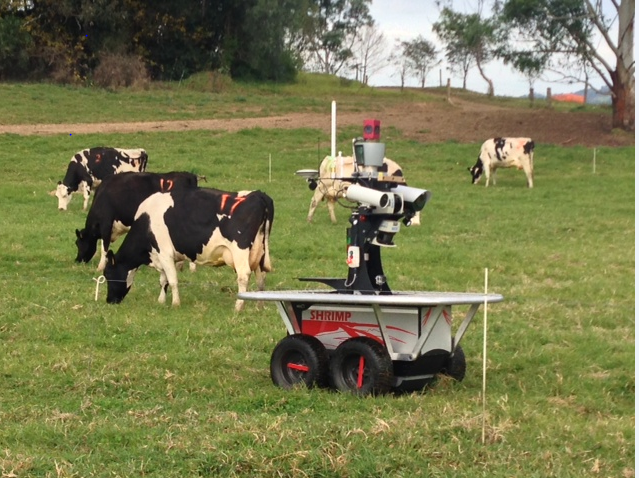
Cows at the University of Sydney’s Corstophine farm were
unfazed by the presence of a robot which herded
the cows out of the paddock calmly and efficiently

(1) Pinterest • The world’s catalog of ideas


amudu: Farm Robots
Agriculture is one of our most important industries. It provides food, feed and fuel necessary for our survival. With the global population expected to reach 9 billion by 2050, agricultural production must double to meet the demand. And because of limited arable land, productivity must increase 25% to help meet that goal. Consider these facts:
Robots Being Developed To Automate Farm Labor - Business Insider
Researchers are now designing robots for the most delicate crops by integrating advanced sensors, powerful computing, electronics, computer vision, robotic hardware and algorithms, as well as networking and high precision GPS localization technologies. Most ag robots won't be commercially available for at least a few years.
In this region known as America's Salad Bowl, where for a century fruits and vegetables have been planted, thinned and harvested by an army of migrant workers, the machines could prove revolutionary.
Farmers say farm robots could provide relief from recent labor shortages, lessen the unknowns of immigration reform, even reduce costs, increase quality and yield a more consistent product.

Check Out Today's Farm of the Future Robots - Industry Tap
Farm robots, or “Agbots,” are expected to become crucial to the long-term productivity, sustainability, and profitability of fruit and vegetable growers. Farm of the future robots, in the minority today, will soon perform the vast majority of work in agriculture.
The following are some of the most exciting and interesting automated, robotic farm machines transforming agriculture and farming as we know it.
Russian Unmanned Agrobot Puts the Fun Back Into Farming
Russian engineers at Avroro Robotocs in Skolkovo released an unmanned farm tractor, which does everything from planting to harvesting by itself. Experts believe that the innovation will fully automate some agricultural activities. Meanwhile, farmers hope that the Agrobot will help to overcome the shortage of manpower

Read more: https://sputniknews.com/videoclub/20160916/1045370680/russian-unmanned-agrorobot-farming.html

Unmanned tractor Agrobot tested by Avrora Robotics of Skolkovo


Related/Background

    Friday, September 16, 2016

    Operational in the lab doesn't mean ready for combat

     "one of the most spectacular acquisition debacles in recent memory."
    Trials, technology, will test aircraft carrier Ford - Daily Press
    The aircraft carrier Gerald R. Ford stands tall at Newport News Shipbuilding, its construction nearly complete and more sailors arriving every week.
    But in other ways, things are far from settled. The first-in-class ship faces significant challenges before it becomes combat ready and can deploy from its future home of Naval Station Norfolk, experts say.
    At a recent Senate hearing, the Defense Department's top weapons tester cited "significant risks" for the Ford when it comes to passing a key, pre-deployment hurdle known as the Initial Operational Test and Evaluation (IOT&E), an independent assessment of the ship and crew during combat scenarios meant to be as realistic as possible.
    Critical new systems have reliability questions or lack enough data to form judgments about performance, according to J. Michael Gilmore, director of Operational Test and Evaluation in the Defense Department.

    Moving Directly to Production with New Technology is Risky

    Navy Matters: Just Because We Have The Capability ...
    technology is not a bad thing. What’s bad is forcing immature technology into service before the reliability and maintainability have caught up with the bleeding edge technology. When war comes, we need technology that works and is robust enough to function under the dirty, maintenance deprived conditions of a battlefield. Aegis is nice but if it breaks down 30 days into combat due to lack of sophisticated maintenance, wouldn’t we be better off with old fashioned rotating radars? If the F-35 that, in peacetime, barely managed to function with the aid of Ph.D technicians working in sterile conditions resembling a hospital operating room can’t be maintained in a dirty carrier hangar and covered in salt water (have you seen some of the pictures of carrier aircraft? – they get awfully dirty!) then what’s the point of having it?

    We need to return to the concept of prototypes. We need to build them and operate them. Prototypes allow us to learn from our mistakes and grow and mature the technology. Hand in hand with that is the opportunity to learn about the maintenance and operating procedures of new technology before it enters production. The Navy’s rush to push the latest technology into production is unwise, costly in the long run, and dangerous in that it leaves us with production ships and aircraft that have failed and unmaintainable technology installed. That F-35 that the Marines declared ready for combat, isn’t really – in fact, it’s not even close.

    The Navy needs to relax, be patient, and let technology mature and allow maintenance to catch up. The way to do this is prototypes.

    Just because we have the capability doesn’t mean we should try to use it. If the average sailor can’t operate and maintain it, it shouldn’t be in the fleet.

    Operational Assessment (OA) Can Assess Risk/Reward Early - AcqNotes

    An Operational Assessment (OA) is an evaluation of operational effectiveness and operational suitability made by an independent Operational Test Agency (OTA), with user support as required, on other than production systems. [2]

    The focus of an OA is on significant trends noted in development efforts, programmatic voids, risk areas, adequacy of requirements, and the ability of the program to support adequate operational testing. An OA may be conducted at any time using technology demonstrators, prototypes, mock-ups, Engineering Development Models (EDM) or simulations, but will not substitute for an Initial Operational Test and Evaluation (IOT&E) required for the Full-Rate Production Decision Review (FRPDR). [1]

    The Program Manager (PM) should request an Operational Assessment (OA) of weapons system components and/or system level EDMs during the Engineering, Manufacturing and Development (EMD) Phase to meet exit/entrance criteria and to help evaluate system performance and assess technical risk before Milestone C.

    Early Operational Assessments

    A PM can request the OTA conduct an Early Operational Assessments (EOA) of prototype items of equipment with the purpose to help the identify and reduce program risk before program initiation. EOS’s are conducted primarily to forecast and evaluate the potential operational effectiveness and suitability of the weapon system during development. EOAs start during Concept Refinement (CR) and/or Technology Development (TD) may continue into system integration. [1]
     Statistics, Testing, and Defense Acquisition: New Approaches and Methodological Improvements | The National Academies Press

    Better Analysis Needed for Assessing Operational Suitability

    Fielding operationally suitable systems is a prime objective of defense acquisition. A suitable weapon system is one that is available for combat when needed, is reliable enough to accomplish its mission, operates satisfactorily with service personnel and other systems, and does not impose an undue logistics burden in peacetime or wartime.1 As noted above, operational test and evaluation is statutorily required to assess the effectiveness and suitability of defense systems under consideration for procurement.
    Scarce resources, increasing technological complexity, and increasing attention to the life-cycle costs of defense systems underscore the need for assurance of suitability and its elements. Experience in the Department of Defense (DoD), similar to that of private industry, shows that the life-cycle maintenance cost of a major system may substantially exceed its original acquisition cost. For example, the total procurement cost of the Longbow Apache helicopter is estimated at $5.3 billion, which is slightly more than one-third of the total estimated 20-year lifecycle cost of $14.3 billion.2

    Suitability deficiencies have been responsible for many of the field problems with newly acquired systems and have generated concerns about the operational readiness of certain military capabilities. Concern about the department's success in fielding suitable systems was expressed in an October 1990 memorandum from the Deputy Undersecretary of Defense for Acquisition. A 1992 Logistics Management Institute review of seven recently fielded systems found that "several systems have not achieved their availability goals, and they consume significantly more logistics resources than anticipated" (Bridgman and Glass, 1992:ii). That study also found that crucial suitability issues are not adequately identified early, or addressed in operational test plans. Such concerns and findings have led to calls for improved assessment of operational suitability. In this chapter, we discuss statistical issues related to the conduct of operational suitability tests and their evaluations and related information-gathering activities.

    Related/Background:

    Wednesday, September 14, 2016

    LeoLabs radar facility to track space debris from the T-Bar Ranch, West Texas


    LeoLabs Alaska Phased Array
    Large radar facility coming to West Texas - MRT.com: Business

    LeoLabs, a California-based space company that will locate softball-size space debris for satellite companies. The deal will provide $12,000 annually for the next five years to help LeoLabs’ advertising and marketing efforts, according to the agreement. Total funds are not to exceed $60,000. The first payment will be made on or before Oct. 1.

    LeoLabs plans to build a physical radar facility at T-Bar Ranch, land that the city of Midland owns in Winkler County. The city draws water from an aquifer on the T- Bar Ranch property.

    The city will lease the 150-foot by-100-foot property for $12,000 a year. The $1.5 million radar facility will be built on a construction pad at T-Bar, a place chosen because it has little radio interference.

    The site will be operated remotely and will be maintained by about three nonpermanent employees, Lacy said, adding that the facility will enable LeoLabs to track debris in the low Earth orbit, which will complement its Alaska-based operation that tracks debris in the polar orbit.

    Per the promotional agreement with MDC, LeoLabs will:
    • Brand the radar facility as the Midland Space Radar, or MSR.
    • Promote the MSR on its website and add a link to the MDC website.
    • Include a description and logo for Midland’s space activities at Midland International Air & Space Port and the Midland Spaceport Business Park in its promotional materials and presentations.
    • Include a reference to the MSR and the city of Midland’s support of the space economy in its press releases.

    Read more: Large radar facility coming to West Texas - MRT.com: Business http://www.mrt.com/business/article_04b08744-793c-11e6-a7a3-0751eecd07f6.html#ixzz4KH5FVbJN
    Under Creative Commons License: Attribution

    Space Debris in LEO
    In explaining LeoLabs to the board, MDC Director of Business Development Tim Danielson said, “The way the system works right now, space junk is tracked by the U.S. Air Force, but the Air Force is not very forthcoming about the junk to public entities because they don’t want our enemies to know how small they can track certain objects.

    "Therefore, DirecTV or whoever can have a satellite go out and have no idea that something is approaching,” he said. “(LeoLabs’) technology will provide an independent, private company tracking this material that other companies can subscribe to so they can get that data.”

    Danielson said the company eventually will be able to track golf-ball-size objects (RCS -30 dBm2).

    LeoLabs™ is dedicated to protecting satellites in low Earth orbit (LEO) from collisions. The number of satellites in LEO is growing rapidly, and there is no reliable or responsive commercial service for tracking these satellites and the debris that threatens them. LEO is a shared, critical resource and responsible stewardship is important if we are to maintain its use. LeoLabs™ Tracking as a Service (TaaS) will address this need with a worldwide network of phased-array radars and a data analytics service that will address the shortcomings of current data sources by (a) tracking 10x more debris than is currently tracked and (b) rapidly responding to urgent customer requests. LeoLabs™ TaaS also includes other services - quickly tracking newly launched satellites, verifying deployments, verifying maneuvers, and troubleshooting satellite malfunctions.

    LeoLabs was spun off from SRI International, according to its website. Its CEO is Daniel Ceperley, its chief technology officer is Michael Nicolls, and its chief engineer is John Buonocore. All three are listed as founders. LeoLabs filed with the California Secretary of State on Jan. 4, 2016. It is incorporated in Delaware.

    The deal marks the third space company the city and MDC have cooperated with. The first was XCOR Aerospace, which is developing the Lynx horizontal takeoff and landing suborbital space plane. XCOR is headquartered at Midland International, as is Orbital Outfitters, which develops spacesuits and will operate the city-owned Midland Altitude Chamber Complex.

    The city and MDC are also working on a partnership with Scotland’s Prestwick Spaceport. The Reporter-Telegram previously reported that XCOR will look to launch the Lynx from Prestwick, with aerospace company Oribital Access serving as the operator. Prestwick-based Orbital Access is eyeing Midland as a possible place for horizontal satellite launches.

    Read more: Large radar facility coming to West Texas - MRT.com: Business http://www.mrt.com/business/article_04b08744-793c-11e6-a7a3-0751eecd07f6.html#ixzz4KGGg0Jay
    Under Creative Commons License: Attribution

    Related/Background:

    Monday, September 5, 2016

    Final QF-4 Phantom Target Drone Flight survives two AMRAAMs from F-35

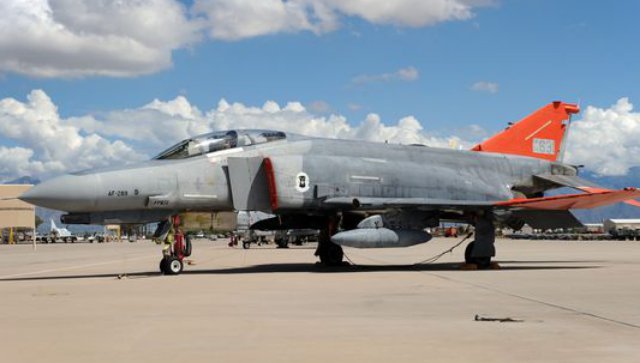
    QF-4, last of the converted F-4 Phantom IIs,
    targeted by F-35 Lightening II with two AMRAAMs
    QF-4 Phantom Flies Final Unmanned Mission | at DefenceTalk
    HOLLOMAN AIR FORCE BASE: The QF-4 Phantom flew its final unmanned mission in the skies above White Sands Missile Range on August 17.

    During the flight, the unmanned aircraft served its primary mission as an aerial target and was shot at by an F-35 Lightning II from Edwards Air Force Base, California.

    “Our mission is to provide those airplanes as targets for our Department of Defense and foreign military sales customers to test the next generation of weapons,” said Lt. Col. Ronald King, the 82nd Aerial Targets Squadron, Detachment 1 commander. “Sometimes, that is a missile, sometimes a surface-to-air missile. For the final unmanned flight, we flew in support of an F-35 mission.”

    This flight served as the final unmanned mission before the QF-4 program ends later this year, and the 82nd ATRS, Det. 1 transitions to flying QF-16s.

    “The QF-4 has been flying for about 15 years, and it has been instrumental in testing next-generation weapons and radar systems,” said King. “We’ll continue to fly them as manned aircraft until the end of the program, which is through December, but this is the last time we are flying it unmanned before we transition to the QF-16.”

    Read more: http://www.defencetalk.com/qf-4-phantom-flies-final-unmanned-mission-68084/#ixzz4JPtAo5XM


    Phantom flies final unmanned mission > Holloman Air Force Base 

    The Aviationist » USAF QF-4 Phantom is shot at by an F-35 with two AIM-120s during last unmanned mission (and survives)
    According to Lt. Col. Ronald King, the 82nd Aerial Targets Squadron, Detachment 1 commander, the aircraft was shot at by the F-35 Lightning II with two AIM-120 AMRAAMs (advanced medium range air-to-air missiles). We don’t know the exact scope of the weapon test, the RoE (Rules Of Enagement), the scenario and whether the QF-4 was expected to escape the downing. Maybe something went wrong, the missile launch failed or was cancelled, or just missed (because no missile has a probability of kill of 100 percent). However, it’s at least worth of note that the unmanned Phantom landed back at Holloman Air Force Base completely unharmed in spite of being targeted by the (controversial) 5th generation fighter and shot at with 2 radar-guided air-to-air missiles.
    Update 1:
    The reason for the QF-4 not being shot down is probably that the test was not a test of the AIM-120 missile’s ability to hit a target (something that has been proved in the past) but on the F-35’s ability to track the target and guide the AMRAAM until this reached the kill envelope. Once the missile starts self-guiding to the drone the test is accomplished and there is no need to waste a costy unmanned aircraft: the AIM-120 is directed to self-destruct before impact.


    Last of the legendary U.S. Air Force F-4 Phantom jets to become yet another missile victim
    The following video shows practical application of QF-4 in training of the Air National Guard:
    In the video we can see two F-15 jets shooting at the targets – the QF-4 Phantoms. To simulate the aerial combat with the highest possible fidelity the targets are equipped with the whole array of countermeasures (chaffs and flares) and may be flown remotely (when serving as a target) or with a pilot in cockpit (Heritage flights, maintenance). When unmanned, the QF-4 also carries an explosive device for self-destruct purpose in case it becomes uncontrollable.


    Even if most modern air forces are equipped with more advanced fighter planes, the F-4 is still comparable if not superior to many enemy aircraft U.S. fighter could face in case of war….

    Sunday, September 4, 2016

    Can Stingray give the Carrier Air Wing the reach to do its job

    spendergast: China Unveils New Divine Eagle UAV with A2/AD Capability
    Is the Era of the Aircraft Carrier Over? | The National Interest Blog
    There’s an increasingly big mismatch between the range at which US carriers can strike their targets and the range at which the carriers themselves can be attacked. That mismatch makes the ‘airfield at sea’ role that US carriers have played for the past few decades much more dangerous.
    An obvious answer for keeping carriers relevant in light of these developments is increasing the range of the CAW. Aircraft with the range necessary to do deep strike missions launched from beyond the range of the enemy’s A2AD capabilities is vital to the continued survival of the carrier. Outfitting the F-35C with external or conformal fuel tanks is one option, albeit an imperfect one—adding these tanks can alter the aircraft’s radar cross section and potentially make it more detectable. Adding long range unmanned aerial vehicles (UAVs) to the CAW is another option. The MQ-25A Stingray is just the tip of the iceberg in this regard, offering a long range aerial refuelling system that can refuel the F-35C in contested territory, expanding the F-35C’s deep strike potential. Developing a long range strike UAV is a logical next step in giving the aircraft carrier the reach and punch it needs to survive in this new threat environment.

    Related/Background:

    Copernicus Sentinel-1A SAR satellite takes hit in solar panel

    Sentinel 1A Solar Panel Before and After
    - red arrow show 40 cm crater caused by debris hit
    Copernicus Sentinel-1A satellite hit by space particle / Sentinel-1 / Copernicus / Observing the Earth / Our Activities / ESA
    31 August 2016

    ESA engineers have discovered that a solar panel on the Copernicus Sentinel-1A satellite was hit by a millimetre-size particle in orbit on 23 August. Thanks to onboard cameras, ground controllers were able to identify the affected area. So far, there has been no effect on the satellite’s routine operations.

    A sudden small power reduction was observed in a solar array of Sentinel-1A, orbiting at 700 km altitude, at 17:07 GMT on 23 August. Slight changes in the orientation and the orbit of the satellite were also measured at the same time.

    Following a preliminary investigation, the operations team at ESA’s control centre in Darmstadt, Germany suspected a possible impact by space debris or micrometeoroid on the solar wing.

    Detailed analyses of the satellite’s status were performed to understand the cause of this power loss. In addition, the engineers decided to activate the board cameras to acquire pictures of the array. These cameras were originally carried to monitor the deployment of the solar wings, which occurred just a few hours after launch in April 2014, and were not intended to be used afterwards.

    Following their switch-on, one camera provided a picture that clearly shows the strike on the solar panel.

    The power reduction is relatively small compared to the overall power generated by the solar wing, which remains much higher than what the satellite requires for routine operations.

    Sentinel-1 is a two-satellite mission for Europe's Copernicus environment monitoring programme, led by the European Commission. The first satellite - Sentinel-1A - was launched in 2014, while its sister Sentinel-1B is still in its commissioning phase following launch just four months ago.

    Related/Background

    Saturday, September 3, 2016

    MIT ME's create steam using ambient sunlight with bubble wrap

    Steam generation under one sun enabled by a floating structure with thermal concentration : Nature Energy

    Author Affiliations

    • Department of Mechanical Engineering, Massachusetts Institute of Technology, 77 Massachusetts Avenue, Cambridge, Massachusetts 02139, USA
      • George Ni, Gabriel Li, Svetlana V. Boriskina & Gang Chen
    • Department of Mechanical and Materials Engineering, Masdar Institute of Science and Technology, PO Box 54224, Abu Dhabi, United Arab Emirates
      • Hongxia Li, Weilin Yang & TieJun Zhang
    The authors have applied for a patent for this technology, but have no other competing interests.

    Abstract

    Harvesting solar energy as heat has many applications, such as power generation, residential water heating, desalination, distillation and wastewater treatment. However, the solar flux is diffuse, and often requires optical concentration, a costly component, to generate the high temperatures needed for some of these applications. Here we demonstrate a floating solar receiver capable of generating 100 C steam under ambient air conditions without optical concentration. The high temperatures are achieved by using thermal concentration and heat localization, which reduce the convective, conductive and radiative heat losses. This demonstration of a low-cost and scalable solar vapour generator holds the promise of significantly expanding the application domain and reducing the cost of solar thermal systems.
    Sponge creates steam using ambient sunlight | MIT News
    In their new design, the researchers [George Ni | LinkedIn, MECHE PEOPLE: Gang Chen | MIT Department of Mechanical Engineering] settled on a spectrally-selective absorber — a thin, blue, metallic-like film that is commonly used in solar water heaters and possesses unique absorptive properties. The material absorbs radiation in the visible range of the electromagnetic spectrum, but it does not radiate in the infrared range, meaning that it both absorbs sunlight and traps heat, minimizing heat loss.
    The researchers obtained a thin sheet of copper, chosen for its heat-conducting abilities and coated with the spectrally-selective absorber. They then mounted the structure on a thermally-insulating piece of floating foam. However, they found that even though the structure did not radiate much heat back out to the environment, heat was still escaping through convection, in which moving air molecules such as wind would naturally cool the surface.
    But we tried the clearer bubble wrap with bigger bubbles for more air trapping effect, and it turns out, it works. Now because of this bubble wrap, we don’t need mirrors to concentrate the sun.” The bubble wrap, combined with the selective absorber, kept heat from escaping the surface of the sponge. Once the heat was trapped, the copper layer conducted the heat toward a single hole, or channel, that the researchers had drilled through the structure. When they placed the sponge in water, they found that water crept up the channel, where it was heated to 100 C, then turned to steam.
    Tao Deng, professor of material sciences and engineering at Shanghai Jiao Tong University, says the group’s use of low-cost materials will make the device more affordable for a wide range of applications.
    “This device offers a totally new design paradigm for solar steam generation,” says Deng, who was not involved in the study. “It eliminates the need of the expensive optical concentrator, which is a key advantage in bringing down the cost of the solar steam generation system. Certainly the clever use of bubble wrap and commercially available selective absorber also helps suppress the convection and radiation heat loss, both of which not only improve the solar harvesting efficiency but also further lower the system cost. “
    Chen and Ni say that solar absorbers based on this general design could be used as large sheets to desalinate small bodies of water, or to treat wastewater. Ni says other solar-based technologies that rely on optical-concentrating technologies typically are designed to last 10 to 20 years, though they require expensive parts and maintenance. This new, low-tech design, he says, could operate for one to two years before needing to be replaced.

    spendergast: MIT creates graphite sponge to efficiently sterilize water

    Friday, September 2, 2016

    Model Using PSA Test Can Help Predict Time to Prostate Cancer Relapse

    Comparison between the α value with (left, dark) and without (right, light) ADT (A) and the time to relapse with (left, dark) and without (right, light) ADT (B). Bars, percentage of the patients who had a relapse in the corresponding time range.

    Model Using PSA Test Can Help Predict Time to Prostate Cancer Relapse | Cancer Network
    PHILADELPHIA — A mathematical model that uses four consecutive prostate-specific antigen (PSA) test results from a patient who had prostate cancer surgery can predict the time it might take for the disease to relapse, and this can help clinicians optimize patients' follow-up visits and develop a treatment plan best suited for each individual patient, according to a study published in Cancer Research, a journal of the American Association for Cancer Research.

     “One in four patients who undergo prostate cancer surgery experiences a relapse,” said study lead author Ilaria Stura, of the University of Turin, Italy, in a press release. “Algorithms that use easily obtainable biological data to accurately predict prognosis can help clinicians and patients make more informed choices.”

    Based on those patients, the investigators created a parameter known as α, which Stura explained is essentially a ratio between the energy required by a cancer cell to survive and the energy it needs to replicate. Cancer cells have higher rates of replication and thus greater production of PSA, allowing the parameter to represent the aggressiveness of tumor cells.
    The α parameter was the only factor found that could significantly predict the time to relapse (P < .001); Gleason score, pathologic stage, post-surgery PSA levels, and other factors could not predict relapse timing.
    Specifically, an α of between 0 and 0.01 implies that there is a 62% likelihood relapse will not occur until 48 months after surgery, and a 93.6% chance it will not occur until after 36 months. Between 0.01 and 0.02 was not as strong a predictor; 61.1% of those patients relapse before 36 months, and 22% relapse after 48 months. For larger α values (between 0.02 and 0.04), relapse will occur in less than 48 months 100% of the time, and in under 24 months in 78.9% of cases. For values above 0.04, the time to relapse will be less than 24 months 100% of the time.
    Specifically in the patients who received ADT, an α between 0 and 0.01 resulted in relapse more than 48 months out in 72.7% of cases; this number rose to 100% if the adjuvant therapy is given for more than 12 months.
    The study is limited by its reliance on retrospective data, but the authors wrote that this could be a valuable and simple tool in helping predict prostate cancer relapse. “We could hence provide a biologically meaningful and practical parameter for promoting personalized medicine in this and possibly in other fields of application,” they wrote.

    Math Algorithm Helps Predict Recurrence of Prostate Cancer - MedicalResearch.com
    Man has always tried to predict the future, especially to prevent catastrophes, diseases and death. In this case, we want to prevent the ‘personal catastrophe’, i.e. the spread of the disease (recurrence of prostate cancer) in the patient. Our work therefore belongs to the so-called ‘personalized medicine’, a very important and innovative clinical approach.

    In particular this study may potentially improve the quality of life of the patients and help the clinicians, since it could give valuable information to the urologist, for example reporting that the growth velocity of the tumor is increasing and that a relapse is expected within few months. With this information, the clinician could chose the best therapy for the patient (e.g. hormone or radio therapy) in order to stop the spread of the disease or, conversely, the use of drugs can be delayed if not necessary.

    Obviously clinicians already try to do this, based on their experience, but our method provides further confidence in their ‘investigation’ work, since the algorithm is validated on data coming from a database much larger than his/her personal experience.

    A Simple PSA-Based Computational Approach Predicts the Timing of Cancer Relapse in Prostatectomized Patients | Cancer Research
    Recurrences of prostate cancer affect approximately one quarter of patients who have undergone radical prostatectomy. Reliable factors to predict time to relapse in specific individuals are lacking. Here, we present a mathematical model that evaluates a biologically sensible parameter (α) that can be estimated by the available follow-up data, in particular by the PSA series. This parameter is robust and highly predictive for the time to relapse, also after administration of adjuvant androgen deprivation therapies. We present a practical computational method based on the collection of only four postsurgical PSA values. This study offers a simple tool to predict prostate cancer relapse. Cancer Res; 76(17); 4941–7. ©2016 AACR.

    Major Findings

    • In the mainframe of a validated tumor growth model (1), the parameter (α) is a biologically sensible indicator of the growth potentiality of the relapsed prostate cancer.
    • Provided only PSA-producing prostate cancer cells may survive after radical prostatectomy (RP), α can be simply estimated on a limited series of PSA values collected after RP, and it proves to be a reliable and robust parameter for predicting the time to relapse.
    • In the absence of any adjuvant therapy, the numeric value of α is inversely correlated (P < 0.0001) with the time to relapse.
    • When adjuvant androgen deprivation therapy (ADT) is prescribed, α is still well correlated to the timing of recurrence (P = 0.0001), but its value is larger, probably because ADT impacts on the prostate cancer cells' metabolic pathways.
    • When the tumor becomes resistant during ADT, α values become even larger, reflecting a direct effect on the cell metabolism.
    • This biologically sensible mathematical model may help clinicians in optimizing their follow-up data elaboration to early predict (and possibly counteract) prostate cancer recurrence.

    Quick Guide to Equations and Assumptions

    As shown by Castorina and colleagues (2), living beings grow according to a common phenomenological universal growth law (PUN), which includes most of the models commonly used (e.g., exponential, Gompertzian,…).
    In this article, we focus on a second-order solution of the PUN and apply it to model the PSA dosage p collected at time t, which reflects the biochemical activity of the hormone-sensitive cell population surviving after radical prostatectomy:
     Embedded Image 
    where p is the PSA value (in ng/mL), P is its limiting value or carrying capacity (in our case P = 100 ng/mL), t is the time of the measurement expressed in months after surgery, and α is the growth parameter for PSA. Note that Eq. A corresponds to the von Bertalanffy law (Eq. B), where K = 1/P, m = 3/4, and n = 1.
    Physical data can be renormalized following simple calculations (see ref. 3 for the details), in terms of rescaled fraction r = (p/P)1/4 and rescaled time τ = α t/4P1/4ln[1-(p0/P)1/4], where p0 is the initial value of the series.
    Far from being mathematical tricks, the rescaled units allow us a quick comparison between our experimental data and the parameter-less universal curve r = 1eτ, obtained by substituting r and τ in the solution of Eq. A. PSA data being very scattered and their time correlation very poor, the α parameter value was evaluated deterministically as:
     Embedded Image 
    where (p, t) are the PSA values and the times of the measurement, respectively. Note that the physical dimensions of α are ng0.25mL−0.25month−1. In principle, α is estimated by all the patient's PSA collection, but in this article, we also investigated the case of fixed values of PSA (i.e., ref. 4) to implement a practically useful algorithm. In the case of adjuvant ADT, which tends to depress the PSA value and the tumor volume, α was calculated from the set of PSA values taken after the end of the therapy.

    Wednesday, August 31, 2016

    Building Trust key to pushing Autonomous Military Technology past "Tipping Point"


    goals are maturing rapidly, the Defense Science Board said in a newly published study.


    “Autonomy, fueled by advances in artificial intelligence, has attained a ‘tipping point’ in value,” the DSB study said. “Autonomy will deliver substantial operational value–in multiple dimensions–across an increasingly broad spectrum of DoD missions, but the DoD must move more rapidly to realize this value. Allies and adversaries alike also have access to increasingly rapid technological advances occurring globally,” the study said.

    The recommendations of the study are briefly outlined in Table 4 at the end of the report, on page 102. Details for each recommendation are included in the relevant chapter sections and provide additional information to assist with their implementation. The Board recommended that the Department of Defense undertake a series of pilot projects “intended to demonstrate the range of benefits of autonomy for the warfighter.”

    Establishing Trust is key to Autonomy

    The Pentagon’s science advisers want military robots to operate with far greater autonomy than they do today. Only one problem: There’s a cloud of distrust and misunderstanding hovering over the robots that the Pentagon already has.

    That’s an unexpected conclusion in a July study from the Defense Science Board, recently acquired by Steve Aftergood of the Federation of American Scientists. The Board wondered what’s inhibiting the development of autonomous military vehicles and other systems. It found that the humans who have to interact with robots in high-stakes situations often labor under the misimpression that autonomy means the machine can do a human’s job, rather than help a human do her job more efficiently. And some simply don’t have faith that the robots work as directed.

    The issue of trust is core to DoD’s success in broader adoption of autonomy. On the one
    hand, an autonomous system must be designed to operate in a trustworthy fashion with respect to the missions for which it was designed. On the other hand, an autonomous system must be designed so that humans (and/or machines) can straightforwardly determine whether, once it has been deployed, it is operating reliably and within its envelope of competence — and, if not, that appropriate action can be taken. Establishing trustworthiness at design time and providing adequate capabilities so that inevitable variations in operational trustworthiness can be assessed and dealt with at run time is essential, not only for operators and commanders, but also for designers, testers,
    policymakers, lawmakers, and the American public. The broad topic of trust shaped many of the recommendations that follow.
    The first set of recommendations focuses on accelerating DoD’s adoption of autonomous
    capabilities and includes:
    • Tackling the engineering, design, and acquisition challenges
    • Mitigating cyber issues introduced by increasingly autonomous and networked systems
    • Creating new test and evaluation and modeling and simulation paradigms
    • Integrating technology insertion, doctrine, and concepts of operations
    • Developing an autonomy-literate workforce
    • Improving technology discovery 
    • Improving DoD governance for autonomous systems
    • Countering adversary use of autonomy
    These interdependent recommendations are intended to build trust in autonomous systems,
    while at the same time accelerating DoD’s progress.

    strengthen the operational pull for autonomy

    The next set of recommendations focuses on strengthening the operational pull for autonomy, both by better understanding how others may use autonomy against the U.S., and by equipping our forces to counter such capabilities. These recommendations take the form of a series of demonstrations and experiments that demonstrate near-term military value while also building warfighter trust:
    • Autonomous agents to improve cyber-attack indicators and warnings
    • Onboard autonomy for sensing
    • Time-critical intelligence from seized media
    • Dynamic spectrum management for protection missions
    • Unmanned undersea vehicles (UUVs) to autonomously conduct sea mine counter-measures missions
    • Automated cyber response
    • Cascaded UUVs for offensive maritime mining
    • Organic tactical unmanned aircraft (UA) to support ground forces
    • Predictive logistics and adaptive planning
    • Adaptive logistics for rapid deployment

    expand the envelope of technologies

    The final set of recommendations is intended to expand the envelope of technologies available
    for use on DoD missions. “Stretch problems” are proposed as a means to both strengthen the
    operational pull and mature the underlying technologies, such that they would be trusted for
    application on DoD missions:
    • Early warning system for understanding global social movements
    • Autonomous swarms that exploit large quantities of low-cost assets
    • Intrusion detection on the Internet of things
    • Autonomous cyber resilience for military vehicle systems
    • Autonomous air operations planning

    Previously, In the 2012 final study on Autonomy, DSB said:

    Unmanned systems are proving to have a significant impact on warfare worldwide. The true value of these systems is not to provide a direct human replacement, but rather to extend and complement human capability in a number of ways. These systems extend human reach by providing potentially unlimited persistent capabilities without degradation due to fatigue or lack of attention. Unmanned systems offer the warfighter more options and flexibility to access hazardous environments, work at small scales, or react at speeds and scales beyond human capability. With proper design of bounded autonomous capabilities, unmanned systems can also reduce the high cognitive load currently placed on operators/supervisors. Moreover, increased autonomy can enable humans to delegate those tasks that are more effectively done by computer, including synchronizing activities between multiple unmanned systems, software agents and warfighters —thus freeing humans to focus on more complex decision making.

    While the potential of autonomy is great, there have been many obstacles to general broad acceptance of unmanned systems, and, specifically, the autonomous capabilities needed to realize the benefits of  autonomy in military applications. Most Department of Defense (DoD) deployments of unmanned systems have been motivated by the pressing needs of conflict, particularly the threat of improvised explosive devices and the need for persistent intelligence, surveillance and reconnaissance (ISR) data collection. To date, most of the demonstrated benefits of autonomous systems have been in air or ground applications, but there exists no reason that they could not be effective in maritime and space missions as well.

    The Task Force was charged to assist the DoD in understanding and preparing to take maximum practical advantage of advances in autonomy by reviewing relevant technologies, ongoing research and the current autonomy-relevant plans of the Military Services. The Department asked the Task Force to identify new opportunities to more aggressively use autonomy in military missions, to anticipate vulnerabilities and to make recommendations for overcoming operational difficulties and systemic barriers to realizing the full potential of autonomous systems.

    Related/Background: