Friday, September 18, 2015

RDRTEC $497k SBIR to study low RCS detection in Sea Clutter

A--SBIRSOL2014.1 - Federal Business Opportunities: Opportunities
Notice Type: Award Notice
Contract Award Date: September 17, 2015
Contract Award Number: N00014-15-C-5100
Contract Award Dollar Amount: $497,134.00
Contractor Awarded DUNS: 611827812
Contractor Awardee: RDRTEC INCORPORATED
3737 ATWELL ST. SUITE 208, DALLAS, TX 75209
Synopsis: Added: Sep 17, 2015 4:30 pm IGF::CT::IGF
Adaptive Radar Detection Approaches for Low-RCS Maritime Vessels in Highly Variable Clutter Condition.

Related/Background:


(SBIR) Navy - Enhanced Small-Target Detection and Tracking Using a Mode-Adaptive Constant False Alarm Rate (CFAR) Detector


  • OBJECTIVE: Develop adaptive Constant False Alarm Rate (CFAR) Detectors that support rapid mode interleaving under resource management control that allows simultaneous support for range dependent multi-resolution processing.
  • DESCRIPTION: Advancements in sensor resource management are needed that would utilize rapid mode interleaving on dynamic irregular time scales, capable of multi-resolution processing and data rate management. Current fielded radar systems offer only the most rudimentary resource management approaches to support detection and tracking. In a coherent radar system the dynamics of the target plays a critical part in determining if the target is detected against either a clutter or noise like background. Optimal detection of targets with different dynamics requires different Constant False Alarm Rate (CFAR) schemes and parameters. Optimal performance therefore requires utilizing variant CFAR’s in a hierarchal manner as well as making the threshold parameters of the CFARs adaptive. The CFAR processing must be capable of maintaining consistent performance across multiple waveform resolutions at the pulse repetition interval (PRI) level. In a maritime environment an objective of this approach is to provide small target detection and false alarm performance in sea-state four equal to that provided by conventional approaches in sea-state two or three. The desired deliverable is an adaptive real-time CFAR software application suitable for demonstration with a candidate Navy radar system.
  • REFERENCES:

Awards


RDRtec proposes Compound Weibull - Enhanced Small-Target Detection and Tracking Using a Mode-Adaptive Constant False Alarm Rate (CFAR) Detector

Sol No.:
Navy SBIR FY2014.1
Topic No.: N141-020
Topic Title: Enhanced Small-Target Detection and Tracking Using a Mode-Adaptive Constant False Alarm Rate (CFAR) Detector

Proposal No.:
N141-020-0367
Firm: RDRTec Inc.3737 Atwell St. Suite 208 Dallas, Texas 75209
Contact:
Sidney Theis
Phone:
(214) 353-8755
Abstract:
The propose effort will determine the feasibility of and continue development of innovative feature-based adaptive constant false alarm rate (FA-CFAR) techniques to detect slow moving and low radar cross section (RCS) maritime targets in challenging clutter environments. A first order approach employed by conventional techniques uses a whitener to notch out the clutter entirely and thus fails to detect endo-clutter targets moving too slowly relative to the radar sensor. Without a good model for sea clutter, CFAR estimates are unreliable in the maritime environment and as a result, saturation can occur. Our work has shown that sea clutter can be approximated by a piecewise linear compound Weibull distribution that independently accounts for Bragg scattering and sea spikes.
Our analysis indicates that reliable estimation of the CFAR threshold based
on the compound Weibull distribution shows up to 25 percent improvement in
probability of detection (Pd) at a constant probability of false alarms
(Pfa).
Benefits:
The anticipated benefit of the developed algorithms that provide additional information needed by the war fighter to have heightened awareness of hostile intent of small boats in a dense traffic environment.

Lambda Sciences -  Enhanced Small-Target Detection and Tracking Using a Mode-Adaptive Constant False Alarm Rate (CFAR) Detector

Sol No.:
Navy SBIR FY2014.1
Topic No.: N141-020
Topic Title: Enhanced Small-Target Detection and Tracking Using a Mode-Adaptive Constant False Alarm Rate (CFAR) Detector

Proposal No.:
N141-020-0165
Firm: Lambda Science, Inc. P.O. Box 238 Wayne, Pennsylvania 19087

Contact:
Joseph Teti
Phone: (610) 581-7940
Web Site: www.lamsci.com
Abstract: Conventional CFAR detection processing has difficulty in heterogeneous clutter (i.e., maritime clutter) because the fixed data size windowing is not well matched to the spatial scales of the wave field over a wide range of sea states. The non-Gaussian nature of heterogeneous clutter gives rise to significant spatially varying CFAR loss to maintain low false alarms that desensitize the radar in stressing clutter conditions. Furthermore, conventional CFAR detection processing will have difficulty maintaining consistent performance with varying range resolution and fixed window data sizes at the PRI level. Recent advances in radar resource management algorithms make use of rapid mode interleaving at the PRI level on dynamic irregular time scales with different range resolution and associated data rates. Optimal detection of targets
requires adaptive CFAR processing over a wide range of maritime clutter conditions (e.g., up to and including sea state 5). LSI is currently working on an advanced adaptive clutter removal processing technique that shows promising performance with conventional CFAR processing, and the development of mode adaptive CFAR detection processing algorithms is a natural extension to this effort.
Benefits:
Resolution and sea state adaptive CFAR detection algorithms for maritime surface search radars.

  • Efficient 3-D Imaging of Vessels for Improved Classification and Persistent Tracking
  • Navy chooses RDRTec to develop common sense-and-avoid radar for Fire Scout and Triton UAVs
  • Slow and small target detection in high sea states References
    • CiteSeerX — SMALL TARGET DETECTION IN HEAVY SEA
    • Watts, S., "Radar Sea Clutter Modelling and Simulation - Recent Progress and Future Challenges," in Radar Clutter Modelling, 2008 IET Seminar on , vol., no., pp.1-7, 19-19 Feb. 2008
      Abstract: This paper reviews current developments in sea clutter modelling, covering both statistical models, mainly based on empirical observations, and modelling of electromagnetic scattering from simulated sea surfaces. The emphasis throughout the paper is on the modelling of low grazing angle microwave radar backscatter in relation to airborne and surface maritime surveillance radar. As well as reviewing current knowledge in these areas the paper also highlights areas where further research is needed.
      keywords: {electromagnetic wave scattering;marine radar;radar clutter;search radar;airborne maritime surveillance radar;electromagnetic scattering;grazing angle;microwave radar backscatter;radar sea clutter modelling;radar sea clutter simulation;surface maritime surveillance radar},
      URL: http://ieeexplore.ieee.org/stamp/stamp.jsp?tp=&arnumber=4476395&isnumber=4476385
    • Kemkemian, Stephane; Lupinski, Ludovic; Nouvel, Myriam; Corretja, Vincent; Cottron, Rodolphe, "Slow and small target detection in high sea states," in Radar Symposium (IRS), 2015 16th International , vol., no., pp.828-833, 24-26 June 2015
      doi: 10.1109/IRS.2015.7226300
      Abstract: This paper addresses the detection of small and slow craft with Maritime Radar. Fast target detection can be carried out using standard processing such as MMTI (Maritime Moving Target Indicator) regardless of the sea state. However, in case of slow moving targets in high sea state, these methods no longer work because of the intrinsic spreading of the sea clutter. After having summarized the statistical modelling of the sea clutter, in order to highlight its particularity especially when observed with high range resolution waveforms, the paper explains the interest of Track-Before-Detect (TBD) detectors for taking benefits of both high-resolution waveforms and sea clutter properties. Two TBD detectors are compared to standard detectors working on a single dwell.
      keywords: {Antennas;Clutter;Correlation;Detectors;Noise;Sea surface;Surface waves},
      URL: http://ieeexplore.ieee.org/stamp/stamp.jsp?tp=&arnumber=7226300&isnumber=7226207
    • Carretero-Moya, J.; De Maio, A.; Gismero-Menoyo, J.; Asensio-Lopez, A., "Experimental Performance Analysis of Distributed Target Coherent Radar Detectors," in Aerospace and Electronic Systems, IEEE Transactions on , vol.48, no.3, pp.2216-2238, JULY 2012
      doi: 10.1109/TAES.2012.6237589
      Abstract: In this paper a performance analysis on recorded live data of some detectors for range-spread targets is developed. To this end, real target and sea-clutter data collected by a fully coherent Ka-band radar system, featuring submeter range resolution, are used. The study is of particular interest for homeland security radar applications where a careful coastal control is necessary to prevent the arrival of nonauthorized small boats. The performance of both rank-one and subspace range-spread target detection strategies is analyzed, both in terms of constant false alarm rate (CFAR) behavior and in terms of detection capabilities. With reference to the former issue, clutter-only datafiles are used whereas, concerning the latter data containing both real target and clutter are used. The targets returns come from typical small boats (such as inflatable, wooden, and patrol boats) appearing range distributed at the resolution of the exploited radar system. Range-time detection maps are shown, assessing the capability of the analyzed processors to detect the aforementioned targets of great interest for homeland coastal security. Finally, the performance improvements achievable by over-resolving the target is quantified.
      keywords: {distributed tracking;millimetre wave radar;radar tracking;target tracking;Ka-band radar system;constant false alarm rate;distributed target coherent radar detectors;homeland coastal security;performance analysis;performance improvements;rank-one target detection;sea-clutter data;submeter range resolution;subspace range-spread target detection;Clutter;Covariance matrix;Detectors;Doppler effect;Radar detection;Vectors},
      URL: http://ieeexplore.ieee.org/stamp/stamp.jsp?tp=&arnumber=6237589&isnumber=6237562
    • Sungho Kim; Yukyung Yang; Joohyoung Lee, "Horizontal small target detection with cooperative background estimation and removal filters," in Acoustics, Speech and Signal Processing (ICASSP), 2011 IEEE International Conference on , vol., no., pp.1761-1764, 22-27 May 2011
      doi: 10.1109/ICASSP.2011.5946843
      Abstract: Detecting small targets is essential for mitigating the sea based Infrared search and track (IRST) problem. It is easy to detect small targets in homogeneous backgrounds such as the sky. When targets are on the border line of heterogeneous backgrounds such as the horizon in the sky and sea surface, solving the problem of detection becomes difficult. This pa per presents a novel spatial filtering method, called Double Layered-Background Removal Filter (DL-BRF), for achieving high detection rates and low false alarm rates. DL-BRF consists of a Modified-Mean Subtraction Filter (M-MSF) and a consecutive Local-Directional Background Removal Filter (L-DBRF). M-MSF enhances the target signal and reduces background noise. L-DBRF removes horizontal structures, which upgrade the signal-to-clutter ratio and background suppression factor. L-DBRF used after M-MSF enhances the synergistic performance of horizontal target detection. We validate the superior performance of the proposed method via real evaluation tests.
      keywords: {infrared detectors;object detection;spatial filters;L-DBRF;M-MSF;cooperative background estimation;double layered-background removal filter;infrared search and track;local directional background removal filter;modified-mean subtraction filter;spatial filtering method;target detection;Noise;Background estimation;Detection;Heterogeneous background;Horizon;Infrared target},
      URL: http://ieeexplore.ieee.org/stamp/stamp.jsp?tp=&arnumber=5946843&isnumber=5946226
    • Kabakchiev, C.; Garvanov, I.; Behar, V.; Kabakchiev, A.; Gashinova, M.; Cherniakov, M., "CFAR detection and parameter estimation of moving marine targets using forward scatter radar," in Radar Symposium (IRS), 2011 Proceedings International , vol., no., pp.85-90, 7-9 Sept. 2011
      Abstract: In this paper we research one original structure of the CFAR detector and made a parameter estimation of the moving marine targets at the background of a sea clutter using Bistatic Forward Scatter Radar (FSR) system. The specific two pulse MTI CFAR processor with K/M-L batch processor and parameter estimator for a marine target with unknown size are investigated on the base of real data records. The data itself t have been gathered by the team of the Birmingham University using in-house developed FSR.
      keywords: {parameter estimation;radar tracking;target tracking;CFAR detection;FSR system;bistatic forward scatter radar;moving marine targets;parameter estimation;sea clutter;Clutter;Detectors;Educational institutions;Estimation;Frequency domain analysis;Radar;Radar scattering},
      URL: http://ieeexplore.ieee.org/stamp/stamp.jsp?tp=&arnumber=6042096&isnumber=6041611
    • Hughes, E.J.; Lewis, M.B., "A multiple intelligent software agent based technique for improving radar detection of low observable small craft in sea clutter," in Signal Processing Solutions for Homeland Security, 2005. The IEE Seminar on (Ref. No. 2005/11108) , vol., no., pp.11 pp.-, 11 Oct. 2005
      Abstract: The current method of detection of a radar target is based on the setting of a threshold determined by the average of the background returns in the region of interest. Problems arise with this method when attempting to detect small targets in littoral waters since in designing the detector it is necessary to make assumptions concerning the statistical behaviour of the background clutter. Since only long term data is available and short term prediction is required there is an inevitable missed detection/false alarm problem. The problems associated with detecting low observable targets using track-before-detect systems based on Hough transform or dynamic programming techniques are reviewed. An alternative self-adaptive spatio-temporal CFAR system and a multiple hypothesis tracker based on multiple intelligent software agents are described. The process is not perfect but, by assuming that there will be too few data measurements to establish the clutter statistics accurately, a robust sub-optimal solution is formed. The process reported is not restricted to radar returns but has potential applications in infra-red and electro-optical systems, and for processing images in particle physics and astronomy.
      keywords: {Hough transforms;dynamic programming;military computing;military radar;radar clutter;radar computing;radar detection;software agents;Hough transform;clutter statistics;dynamic programming techniques;false alarm problem;inevitable missed detection;low observable small craft;multiple hypothesis tracker;multiple intelligent software agent;radar target detection;sea clutter;self-adaptive spatio-temporal CFAR system;track-before-detect systems},
      URL: http://ieeexplore.ieee.org/stamp/stamp.jsp?tp=&arnumber=1542909&isnumber=32953
    • Lopez-Risueno, G.; Grajal, J.; Diaz-Oliver, R., "Target detection in sea clutter using convolutional neural networks," in Radar Conference, 2003. Proceedings of the 2003 IEEE , vol., no., pp.321-328, 5-8 May 2003
      doi: 10.1109/NRC.2003.1203421
      Abstract: A detector based on convolutional neural networks is proposed for radar detection of floating targets in highly complex and nonstationary cluttered environments. This detector is coherent and monocell, i.e. it works with the complex envelope of the echoes from the same range cell. It includes a pre-processing time-frequency block implemented by the Wigner-Ville distribution, which provides a constant false alarm rate (CFAR) behavior regarding the clutter power when normalization is utilized. Simple theoretical models for the clutter and targets were allowed to study the impact of the correlation and Doppler of both target and clutter on its performance. This detector has also been tested with real-life sea clutter with an improved performance compared to classic detectors.
      keywords: {Doppler effect;Wigner distribution;convolution;marine radar;neural nets;radar clutter;radar detection;radar tracking;target tracking;Wigner-Ville distribution;clutters Doppler;coherent detector;constant false alarm rate;convolutional neural networks;correlation impact;monocell;nonstationary cluttered environments;preprocessing time-frequency block;radar detection;sea clutter;target detection;targets Doppler;Convolution;Detectors;Intelligent networks;Neural networks;Object detection;Radar clutter;Radar detection;Radar signal processing;Testing;Time frequency analysis},
      URL: http://ieeexplore.ieee.org/stamp/stamp.jsp?tp=&arnumber=1203421&isnumber=27105
    • Hennessey, G.; Leung, H.; Drosopoulos, A.; Yip, P.C., "Sea-clutter modeling using a radial-basis-function neural network," in Oceanic Engineering, IEEE Journal of , vol.26, no.3, pp.358-372, Jul 2001
      doi: 10.1109/48.946510
      Abstract: Recently, neural networks have been proposed for radar clutter modeling because of the inherent nonlinearity of clutter signals. This paper performs an analysis of the practicality of using a radial basis function (RBF) neural network to model sea clutter and to detect small target embedded in sea clutter. An experiment using an instrumental quality radar was carried out on the eastcoast of Canada to create a rich sea clutter and small surface target database. This database contains both staring and scanning data under various environmental conditions. Using data-sets with different characteristics, we investigate the effects of quantization error, measurement noise, generalization of the neural net over ranges and sampling rate on the RBF clutter model. Despite these physical limitations, the RBF model was shown to approach an optimal predictive performance. The RBF predictor was also applied to detect various small targets in this database based on the constant false alarm rate (CFAR) principle. This RBF-CFAR detector was demonstrated to be able to detect small floating targets even in rough sea conditions
      keywords: {backscatter;chaos;quantisation (signal);radar clutter;radar signal processing;radial basis function networks;Canada;constant false alarm rate;instrumental quality radar;measurement noise;optimal predictive performance;quantization error;radial-basis-function neural network;rough sea conditions;sampling rate;scanning data;sea-clutter modeling;small floating targets;staring data;Databases;Instruments;Neural networks;Noise measurement;Performance analysis;Quantization;Radar clutter;Radar detection;Sea measurements;Sea surface},
      URL: http://ieeexplore.ieee.org/stamp/stamp.jsp?tp=&arnumber=946510&isnumber=20487
    • Wang Guoyou; Zhang tianxu; Wei Luogang; Sang Nong, "A multifeature-based algorithm for small target detection," in Systems, Man and Cybernetics, 1995. Intelligent Systems for the 21st Century., IEEE International Conference on , vol.5, no., pp.4085-4088 vol.5, 22-25 Oct 1995
      doi: 10.1109/ICSMC.1995.538430
      Abstract: In this paper, an efficient algorithm of small target detection has been developed which combines the geometric properties of low-order moments of specific targets with the signature of discontinuity not widely used in current methods between small targets and its neighbor regions. This algorithm includes two steps: 1) to construct an average grey absolute difference maximum map (AGADMM), eliminate the background clutter and then enhance the target; and 2) to use the geometric properties of low-order moments of a specified target to discriminate between the targets and other normal objects. Experiments with visual and infrared images has shown that this algorithm can provide satisfactory detection performance for exploiting many features of a specified target in detecting a small target
      keywords: {clutter;computational geometry;image recognition;object detection;target tracking;average grey absolute difference maximum map;discontinuity signature;geometric properties;ground clutter;infrared images;low-order moments;multifeatures-based algorithm;small target detection;visual images;Fractals;Infrared detectors;Infrared imaging;Jitter;Object detection;Pixel;Q measurement;Sea measurements;Shape;Size measurement},
      URL: http://ieeexplore.ieee.org/stamp/stamp.jsp?tp=&arnumber=538430&isnumber=11543


Thursday, September 17, 2015

Prostate Cancer News - 2015-09-17


Prostate Cancer News - 2015-09-17

General Case Management

Targeted treatments help heal prostate cancer | WOODTV.com

The labyrinth called prostate cancer - The Sun Chronicle : Stories

Richard Tayson has prostate cancer. How he's been living with it for nine years says a lot about the state of the disease today.

Knowing that aggressive treatment could mean urinary incontinence or erectile dysfunction, he found new doctors when those advocating surgery told him, "You can't make love if you're dead."
"It's a terrible decision to make; you feel doomed no matter what you do," Tayson said. "I'm walking around with cancer cells, but I'm handling it. If I make the wrong decision, I'm willing to live _ or die _ with it because I'm taking control of my situation."
That's just what the American Urological Association and the American Cancer Society, among other groups, want to see: informed men who get tested for prostate cancer and then carefully consider their options if signs point to disease. Both groups concede that men were overdiagnosed and overtreated when PSA screening was newer. That overtreatment gave rise to a kind of no-testing backlash and cynicism over whether the real motive was making money. Nevertheless, there is a danger.

Great news as Government signals backing for cancer plan - Cancer Research UK - Science blog

Finding answers amid prostate cancer confusion;

Israeli men at highest risk compared to those in 19 other countries to get prostate cancer - Business & Innovation - Jerusalem Post

Choices you Make

Lower Your Risk for Prostate Cancer | Spartanburg Regional Healthcare System - WYFF Home

some steps you can take to help prevent prostate cancer:
  • Maintain a healthy diet by eating more fish and limiting consumption of red meat and dairy products.
  • Limit calcium intake to no more than 1,500 mg of calcium a day.
  • Avoid tobacco.
  • Limit alcohol to no more than one drink per day.
  • Avoid over-supplementation with megavitamins.

Is stress killing men with localized prostate cancer (at least in Sweden)? | THE "NEW" PROSTATE CANCER INFOLINK

Prostate Cancer Death Risk Linked to Stress - Renal and Urology News

High stress levels are associated with an increased rate of prostate cancer (PCa)-specific mortality among men treated for clinically localized PCa, according to researchers.
Michael Jan, MD, and collaborators at the Karolinska Institutet in Stockholm, Sweden, surveyed 4,105 men treated for clinically localized prostate tumors. Those with the highest levels of perceived stress had a 66% increased risk of PCa-specific mortality compared with men who had low stress levels, the investigators reported online ahead of print in the Scandinavian Journal of Urology. They also had a high frequency of grieving and sleep loss, as well as fewer people with whom  to share their emotional problems, according to the investigators.

Screening and Diagnosis

Biopsies, Genomics and Pathology

Prostate cancer: Urinary PCA3 and TMPRSS2:ERG reduce the need for repeat biopsy : Nature Reviews Urology : Nature Publishing Group

Biopsy: Quick and easy prostate core assessment by VR-SIM : Nature Reviews Urology : Nature Publishing Group

New tool sharpens hunt for prostate cancer

Artemis guides the biopsy needle to the right location, and it has all the patient's data so it can put the needle back in the same place for future biopsies.
The procedure, which is covered by insurance, is done as an outpatient and results are available within 24 to 48 hours. As with all prostate biopsies, bleeding and urinary tract infection are possible, he said.
Springhart calls Artemis a "game changer" in the way physicians biopsy and diagnose men with prostate cancer.
"Before, we overtreated prostate cancer a lot more," he said. "Now we have more information to better differentiate between those who need surgery and those who do not."
Camunas, division chief for acute care and general surgery at GHS, said his brother underwent a radical prostatectomy after his diagnosis eight years ago.
Had this technology been available then, he said, he might not have had to.
"Rather than just doing a random ultrasound biopsy that they do in the office, they used the Artemis and detected a suspicious nodule," he said. "Probably using ultrasound-guided biopsy, they would never have hit the thing. I was blessed."

Tests

Elevated PSA Doesn't Always Mean Prostate Cancer — BioPortfolio.com


Your Cancer Answers: Testing for prostate cancer

PSA screening and testing is a complicated issue that is best discussed with your physician if to screen or not. In the near future, hopefully there will be more refined and sensitive tests such as the PSA-3, TMPRSS2:ERG gene fusion product and 3Telsa MRI imaging that will increase the ability to screen and detect prostate cancer. Until these future tests are available the PSA and your physician are your best tools in prostate cancer. All of us at Marian Regional Medical Center are committed to continuing the fight against prostate cancer and all cancerous diseases.
Marian Cancer Care is providing a free prostate cancer screening for men without health coverage and between the ages of 55 and 69 Sept. 19 9 to 11 a.m. at Mission Hope Cancer Center. Call 219-4673 to register as space is limited.

Despite rain, car show still manages to get men revved about prostate cancer testing

Detecting prostate cancer | Tribune Register

A new test to detect prostate cancer may reduce the need for invasive surgery. This new test that costs $10, not only detects the cancer but also tells the size of the tumor as well. This is likely to help in early detection of the cancer, reducing the number of patients afflicted by it.

Prostate cancer test which detects tumour size could save thousands of lives - Telegraph

Johns Hopkins: ultrasensitive PSA after surgery predicts biochemical relapse | THE "NEW" PROSTATE CANCER INFOLINK

Imaging

Novel Technique May Improve Detection of Aggressive Prostate Cancer - Renal and Urology News

Treatment

10-year outcomes of men initially diagnosed with TxN+M0 prostate cancer in the PSA era | THE "NEW" PROSTATE CANCER INFOLINK

for men with N+ disease at the time of diagnosis, some form of immediate localized therapy will improve long-term survival as compared to simple systemic therapy. For the men who did receive such localized therapy (i.e., those in Groups A, B, C, and E), 10-year overall survival was achieved by about 74 percent of the group compared to about 37 percent of those (in Groups D and F) who did not.

Active Surveillance

What percentage of prostate cancer patients are really good candidates for active surveillance? | THE "NEW" PROSTATE CANCER INFOLINK
Active surveillance may be underused for men with localized prostate cancer
Surveillance a Good Option in Very Low-Risk Prostate Cancer | Cancer Network

Surgery

Radiation

Primary radiotherapy vs conservative management for localized prostate cancer-a population-based study.
Saving Prostate Cancer Patients from Collateral Damage

Hormone

Neoadjuvant ADT prior to radical surgery in high-risk prostate cancer patients | THE "NEW" PROSTATE CANCER INFOLINK

Chemo

Prostate cancer: No evidence for adjuvant chemotherapy in high-risk disease : Nature Reviews Urology : Nature Publishing Group

The RTOG trial investigated the survival benefit of chemotherapy combined with androgen deprivation therapy (ADT) in patients with high-risk nonmetastatic prostate cancer after radiotherapy. However, the 10-year overall survival data showed no difference between treatments; thus, chemotherapy is unlikely to improve the overall survival in patients with nonmetastatic prostate cancer.

New Techniques

FDA poised to OK new prostate cancer procedure | North Bay Business Journal

Side Effects

The Facts About Prostate Cancer Surgery and Impotence

Advanced technology has improved prostate cancer surgery to reduce the risks of erectile dysfunction following the procedure. However, possible nerve damage during surgery can still cause impotence in some men. Urinary incontinence is another possible side effect.
A man’s ability to obtain and maintain an erection after prostate cancer surgery may depend on age, sexual function before the operation, and  whether certain nerves are cut during the procedure, according to the American Cancer Society. The organization stated that all men may experience some decrease in the ability to have an erection. But the younger the man, the better chances there are of maintaining the ability to have an erection.

Advanced/Recurrence

Creating New Tools to Guide Personalized Therapy in Advanced Prostate Cancer

Newswise — New Brunswick, N.J., September 14, 2015 – Rutgers Cancer Institute of New Jersey researcher Justin Drake PhD, has been awarded $450,000 in grants to support a pair of three-year projects aimed at developing biomarkers to predict disease progression and guide treatment strategies for advanced prostate cancer using a combination of laboratory cancer models, computational and targeted mass spectrometry approaches.

New drug-like compounds may improve odds of men battling prostate cancer

Researchers at Southern Methodist University, Dallas, have discovered three new drug-like compounds that could ultimately offer better odds of survival to prostate cancer patients. The drug-like compounds can be modified and developed into medicines that target a protein in the human body that is responsible for chemotherapy resistance in cancers, said biochemist Pia D. Vogel, lead author on the scientific paper reporting the discovery.

The Daily Targum :: Combined therapies show promise in treating prostate cancer

ADT is a hormonal treatment, he said. It reduces testosterone levels in the body, which normally affects the cancer.
Combining this with chemotherapy was first proposed 10 years ago, DiPaola said. At the time, he chaired the Eastern Oncology Cooperative Group hosted by the National Cancer Institute. The group’s goal was to combine resources between different institutions to perform a national study.

Survival of men with mCRPC who receive no additional life-prolonging treatment | THE "NEW" PROSTATE CANCER INFOLINK

A new article in the Scandinavian Journal of Urology provides us with some insight — from relatively recent data — into the survival times of men with metastatic, castration-resistant prostate cancer (mCRPC) after prior treatment with androgen deprivation therapy (ADT) but who either decline or do not receive any further form of life-prolonging therapy.


Tuesday, September 15, 2015

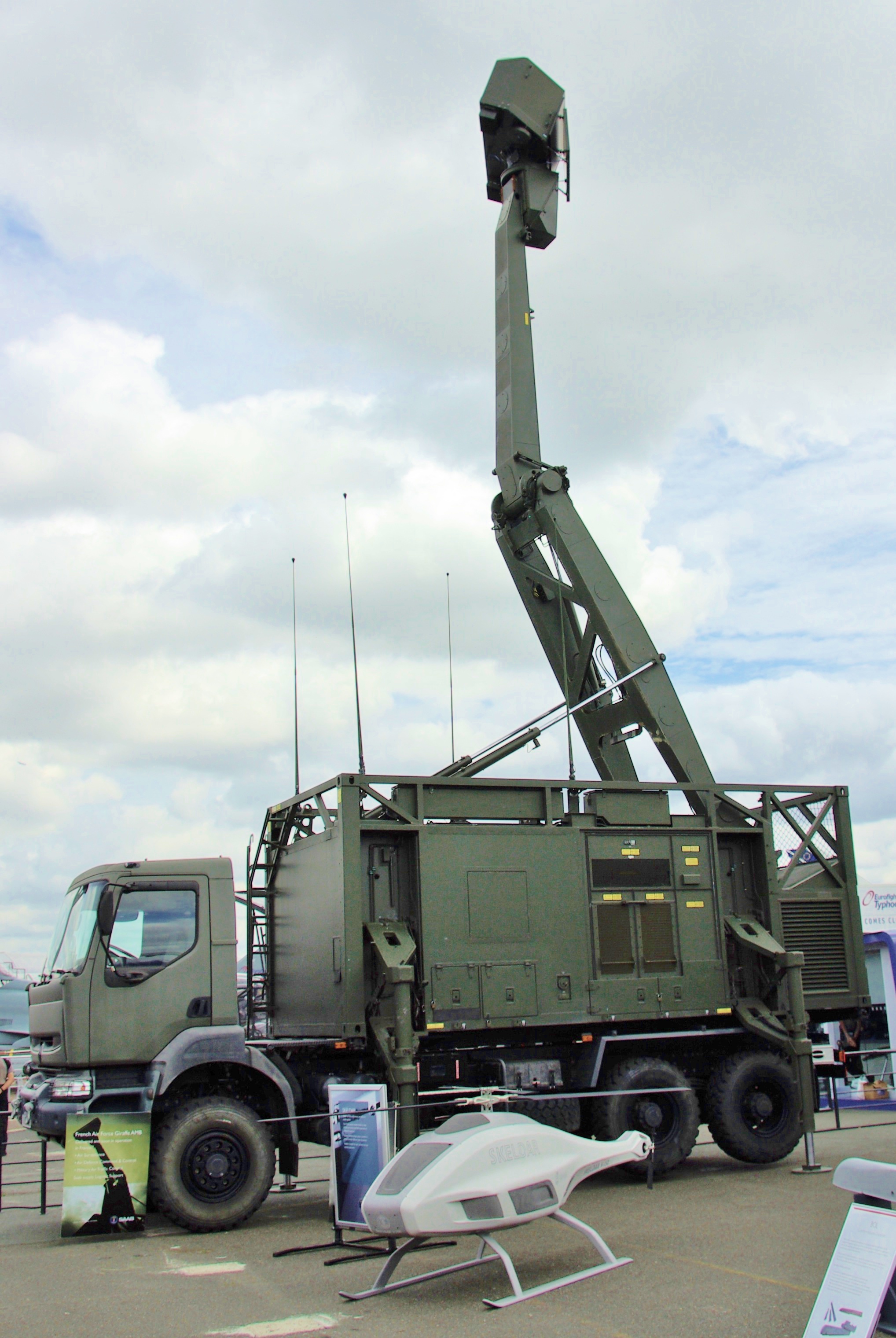
Saab adds Counter-UAS Capabilities to Giraffe AMB Radar Family

GIRAFFE Radar -
Wikipedia, the free encyclopedia
Saab's Giraffe AMB Gets Counter-Unmanned Air Systems Capabilities

Saab has demonstrated ‘Enhanced Low, Slow and Small’ (ELSS) functionfor its Giraffe AMB radar to counter-Unmanned Air Systems (UAS).


This allows the Giraffe AMB to undertake dedicated operations, while conducting its full suite of regular air surveillance functions.


The new ELSS function was demonstrated in April during a UK-government sponsored trial to test and evaluate radar performance against demanding air targets in a complex environment.


News from Saab - 20150914-giraffe-radar-shows-enhanced-anti-uas-skills-en-1-1048679.pdf

With remarkable accuracy the ELSS function automatically finds and classifies low, slow and small targets; as slow and small as the quadcopter UAS vehicles typically flown by hobbyists. During the Bristow 15 trials, targets had a radar cross section as small as 0.001 sq metres. Saab’s ELSS function pushes the boundaries of small target detection, combines that with the latest in tracking technology and novel target classification techniques and wraps it up with a newly- designed, purpose-built human machine interface concept.
Although it was demonstrated on this occasion with the Giraffe AMB, the ELSS function can now be implemented on all Saab Giraffe radars. This means the Giraffe family of radars uniquely provides a
simultaneous capability to detect and classify all kinds of air vehicles from ballistic missiles to the very small UAS.

Related/Background:

GIRAFFE Radar - Wikipedia, the free encyclopedia
The Saab (formerly Ericsson Microwave Systems AB) GIRAFFE Radar is a family of land and naval two- or three-dimensional G/H-band (4 to 8 GHz) Passive electronically scanned array radar-based surveillance and air defense command and control systems tailored for operations with medium- and Short Range Air Defense (SHORAD) missile or gun systems or for use as gap-fillers in a larger air defense system. The radar gets its name from the distinctive folding mast which when deployed allows the radar to see over nearby terrain features such as trees, extending its effective range against low-level air targets. The first systems were produced in 1977. By 2007, some 450 units of all types are reported as having been delivered.
Saab Electronic Defence Systems (EDS) on May 2014 unveiled two new classes of active electronically scanned array (AESA) radar—three land-based systems (Giraffe 1X, Giraffe 4A and Giraffe 8A) and two naval variants (Sea Giraffe 1X and Sea Giraffe 4A) in X- and S-band frequencies—to complement its existing surface radar portfolio.[1]

Proceedings from APSAR 2013 coincides with APSAR 2015

IEEE Xplore Abstract - Foreword to the Special Issue on Advances in SAR and Radar Technology
Hirose, A.; Rosen, P.A.; Yamada, H.; Zink, M., "Foreword to the Special Issue on Advances in SAR and Radar Technology," in Selected Topics in Applied Earth Observations and Remote Sensing, IEEE Journal of , vol.8, no.8, pp.3748-3750, Aug. 2015
doi: 10.1109/JSTARS.2015.2475455
Abstract: The twenty-five articles in this special issue focus on the latest advances in synthetic aperture radar (SAR) and radar technology. These papers were presented at the Asia-Pacific Conference on Synthetic Aperture Radar (APSAR) 2013, an International Conference devoted to SAR and radar technology, held in Tsukuba, Japan, on September 23???27, 2013. 
keywords: {Meetings;Special issues and sections;Synthetic aperture radar},
URL: http://ieeexplore.ieee.org/stamp/stamp.jsp?tp=&arnumber=7258441&isnumber=7258413

[APSAR 2013 Tsukuba Japan 23 - 27 September 2013]

Participants in APSAR 2013 Tsukuba enjoyed active discussion widely on synthetic aperture radar, its applications and future technology. On the conference first day, keynote lectures were given by Dr. Masanobu Shimada of JAXA, Prof. Wen Hong of MITL-IECAS, Prof. Young Kil Kwag of Korea Aerospace University, Dr. Manfred Zink of DLR, Mr. Robertus Heru Triharjanto of LAPAN and Prof. Wolfgang-Martin Boerner of UIC as priming stimuli on technology advancement as well as scientific/engineering policy. The following technical sessions were held in 3 or 4-parallel style. They included 7 special sessions of SAR Application - Natural Disaster Monitoring I, II, ALOS-2 Global Observation I, II, Polarimetric SAR Methods and Applications I, II, and Tandem-X and Next Generation SAR, and also 22 regular sessions on various SAR and radar areas such as systems, applications (vegetation, ocean, soil, etc.), signal/information processing and data analysis. The statistics shows:
  • Participants: 236 from 22 countries (Japan 62%, Asia-Pacific except Japan 22%, Other 16%)
  • Papers: 163 (Oral 128 incl. Keynote 6, Poster 41) (Japan 51%, Asia-Pacific except Japan 32%, Other 17%), submission 233
  • Exhibition: 17 companies and institutes
  • Proceedings: APSAR 2013 organizing committee (IEEE GRSS JC / IEICE ES), accessible in IEEE Xplore.

Related/Background:

FAA hires SRC sole source to install BSTAR V2 Bird detection radar at Boston Logan International Airport

SRC BSTAR Radar System
Consultative, technical, engineering support of the installation of a BSTAR V2 Bird detection radar system at Boston Logan International Airport - Federal Business Opportunities: Opportunities

BOS
This procurement is in support of the FAA's Airport Technology R&D Branch. The award will be for the procurement of SRC Inc. consultative engineering design and initial support services and supply of Rugged Enclosure for BSTAR V2 Radar.


The FAA has and continues to conduct studies on the ability of specialized radar systems to detect birds on and around airports.


Visit NBCNews.com for breaking news, world news, and news about the economy


In doing so, the FAA has recently procured two BSTAR V2 bird detection radar systems. SRC Inc. is the only commercial entity capable of providing the detailed engineering support and consultation on the BSTAR V2 radar system necessary for KBOS. Furthermore, SRC Inc. is the only company that supplies the unique rugged enclosure that is required to protect the BSTAR V2 radar from harsh environmental requirements.

Previously/Background:

Monday, September 14, 2015

Recent Advances in Radar Technology | 2015-09-15 | Microwave Journal

Recent Advances in Radar Technology | 2015-09-15 | Microwave Journal

We have discussed recent advances in radars from UHF up to millimeter
wave and from industrial process monitoring to exploring the solar
system. The major trend in high performance radar is the AESA and
multiple imaging modes. While many areas of radar technology have
matured in the last half century, reflected in reduced SWAP and cost,
new technology and algorithms continue to enable new performance levels
in existing applications and the emergence of new applications.

RAND Reports on Growth of Chinese Threats to U.S. Surface Fleet in WestPac

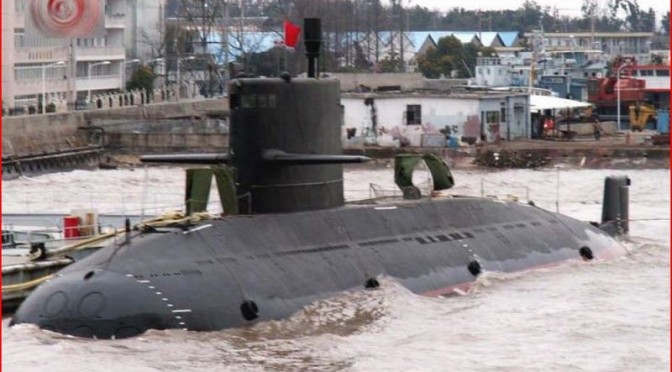
China’s Yuan-class Submarine
Chinese Active Defense Layers (Office of Naval Intelligence graphic).
Note that the range lines reflect where PLA aircraft and submarines
might be expected to operate in wartime based on evidence to
date. While PLA aircraft would be unlikely to fly further east
from the second layer's line if U.S. and allied air coverage
from bases along the Second Island Chain was strong, the
same might not be true for PLAN SSNs. Also note that the
maritime approaches to Luzon and the northern/central
Ryukyus fall within the PLA's middle layer, and Taiwan
and the southern Ryukyus within the inner layer.
Chinese Threats to U.S. Surface Ships: An Assessment of Relative Capabilities, 1996–2017 | RAND

This brief focuses on one area in which China has made rapid and substantial relative improvements: its ability to locate and attack U.S. surface ships, especially aircraft carriers, in conflicts centered on Taiwan or the Spratly Islands.


During the Taiwan Strait Crisis in 1996, China was reportedly unable to locate, much less attack, two U.S. aircraft-carrier battle groups in the waters around Taiwan. In contrast, China can now hold the U.S. Navy's surface fleet at risk at significant ranges from the mainland. This threat to the U.S. surface fleet continues to grow. China's anti-surface capability is founded on four developments:
  1. the establishment of an increasingly capable long-range maritime surveillance capability designed to detect and track surface ships, 
  2. the deployment of sophisticated anti-ship cruise missiles and the world's first anti-ship ballistic missile, 
  3. the acquisition of strike aircraft with greater range and power, and 
  4. the deployment of new classes of larger and quieter submarines armed with cruise missiles and torpedoes.

While the development of China's anti-ship ballistic missile capability has garnered headlines, this analysis suggests that the PLA's steady (but less heralded) development of quieter, more capable
submarines represents a more immediate threat — one that puts U.S. carrier-strike groups within 2,000 km of the Chinese coast at significant risk. In 1996, China had taken delivery of only two
submarines that could be described, by any reasonable definition, as modern. The remainder of its fleet consisted of legacy boats based on 1950s technology, lacking teardrop shaped hulls and armed only with torpedoes.
By 2017, China will have a smaller but more capable fleet, with 49 modern ships, including both Russian Kilo-class boats and indigenous designs. China's recent submarine classes are armed with both sophisticated cruise missiles and torpedoes, greatly increasing the range from which they can attack. Although most Chinese boats are diesel-powered and none is up to U.S. standards, they could nevertheless threaten U.S. surface ships.

Related/Background:


Sunday, September 13, 2015

Second Cherry Point shadow falls in Neuse River

U.S. Marine Corps Lance Cpl. Gabriel R. Streal, an
unmanned aerial vehicle maintainer assigned to Marine
Unmanned Aerial Vehicle Squadron (VMU) 2, conducts
a pre-flight check on an RQ-7B Shadow prior to a training
flight at Marine Corps Outlying Field Atlantic Field on
July 15, 2015. VMU-2 conducted a training flight to
increase familiarization with a RQ-7B Shadow, and
train flight operators new to the unit.
(U.S. Marine Corps photo by Lance Cpl. Koby I. Saunders/Released)


Another Cherry Point drone ends up in Neuse River
For the second time this summer, a Marine Corps drone has ended up in the Neuse River.
Cherry Point says the 11-foot long UAV, or unmanned aerial vehicle, ditched into the river around 9:50 a.m.
It happened north of the air station, according to Cherry Point.
The air station says Marine Unmanned Aerial Vehicle Squadron 2 was doing local familiarization flight training when the accident occurred.
No one was injured and there are no reports of any property damage.
The accident involved a Shadow, which is 11 feet long and has a 14-foot wingspan. The UAV weighs less than 400 pounds and does not carry weapons.
Marines say the drone has been located and recovered about six hours after the accident.
Back on June 24th, the same type of UAV ended up in the Neuse, and that drone was never found.

2nd Marine Aircraft Wing

2nd Marine Aircraft Wing UAV crashes | The County Compass

Saturday, September 12, 2015

Exercise Dawn Blitz hits Camp Pendleton

Partner Nations Join Dawn Blitz - YouTube


Dawn Blitz 2015 - YouTube


Exercise Dawn Blitz hits Camp Pendleton - Observation Post: News

United States Marines and sailors, along with service members from Japan, Mexico and New Zealand, executed an amphibious landing on the beaches of Marine Corps Base Camp Pendleton as part of Exercise Dawn Blitz 2015, Sept. 5.
Dawn Blitz is a multinational, amphibious training exercise intended to refine the Navy and Marine Corps’ ability to effectively operate together as a cohesive crisis response force, as well as strengthen the international military relationships through crisis action planning, cooperation in amphibious operations, and command and control capabilities.

“Dawn Blitz is a great opportunity to train with the nations we are partnered with,” said Berger. “For 2015, we are honored to have Japan, Mexico, New Zealand, Australia, Chile, and Colombia working closely with us again to further enhance our combined ability to conduct complex amphibious operations. I’ve seen them first hand, working alongside coalition partners, broadening their perspective of the world and learning what it means to be an expeditionary force in readiness.”

spendergast: U.S. and Allies to Blitz Southern California Beach in September with DB15

Qualcomm Flight gives microUAV big Smartphone capabilities

Qualcomm Snapdragon Flight
Snapdragon Flight reference drone


First public demo of Snapdragon Flight robotics dev platform in one of world’s smallest 4K drones | Qualcomm
Qualcomm Snapdragon Flight was announced at the Qualcomm: Accelerating Robotics event, where Matt Grob, CTO of Qualcomm Technologies, shared our vision for robotics with investors, media, and analysts. Hugo Swart, senior director of product management, made the announcement, followed by a live demo of the Snapdragon Flight reference drone—one of the world’s smallest 4K flying cameras that showcases the power of Snapdragon Flight.
The event also marked the culmination of Qualcomm Robotics Accelerator, powered by Techstars--a four-month mentorship program designed to help 10 robotics start-up companies take their ideas to the next level. The event included a Demo Day where each of the 10 companies pitched their ideas to investors and media.

Qualcomm mobile SoCs take to the skies with Snapdragon Flight | AndroidAuthority

Qualcomm Announces Reference Platform with High-end Performance Capabilities to Advance Consumer Drones
The Snapdragon Flight features advanced processing power, real-time flight control on the Qualcomm® Hexagon™ DSP, built-in Qualcomm® 2x2 Wi-Fi® and Bluetooth® connectivity, and a leading global navigation satellite system (GNSS) optimized to support highly accurate location positioning. The Snapdragon Flight is designed to enable the advanced features that drone consumers want most, including:
  • 4K Video – 4K high resolution camera support, image enhancement and video processing capabilities and simultaneous 720p encoding for first person view
  • Advanced Communication and Navigation – Dual-band 2x2 802.11n Wi-Fi, Bluetooth 4.0, and 5 Hz GNSS location capabilities with advanced real-time flight control on Hexagon DSP
  • Robust Camera and Sensor Support – 4K stereo VGA, optic flow cameras, inertial measurement unit (IMU), barometer sensor support and ports for additional sensors
  • Qualcomm® Quick Charge™ Technology – Supporting fast battery charging in between video/picture sessions

New Qualcomm Tech Could Lead to the Ultimate Drone | WIRED

Qualcomm is trying to become the default central nervous system for the next generation of drones, too. The Qualcomm Snapdragon Flight puts a Snapdragon 801 SoC with a quad-core 2.26GHz processor, dual-band Wi-Fi and Bluetooth connectivity, support for real-time flight control
systems, a Global Navigation Satellite System (GNSS) receiver, 4K video processing, and support for speedy recharging onto a little board that’s the size of a business card.

The idea behind the Snapdragon Flight reference platform is that drone manufacturers can use it to build cheaper, lighter, smaller, and more energy-efficient UAVs with advanced capabilities. Along with the video and navigation tools on board, Qualcomm says the board’s processing mettle is strong enough to support automated obstacle-avoidance features.


“The board, including the Snapdragon 801, is combined with advanced drone software and development tools, making Snapdragon Flight more like a reference design than anything else,” Talluri writes. “Drone or robotic developers and OEMs using Snapdragon Flight can create more
innovative designs with advanced features in faster time-to-market and with reduced development costs. This is achieved because Snapdragon Flight integrates virtually all the key elements developers need, and they’re already optimized to work together.”

Qualcomm Wants To Make Drones More Like Cellphones | Popular Science
“Today, drones are made from multiple component vendors providing separate solutions for photography, navigation and communications, adding to the cost and bulk of consumer drones,” said Raj Talluri, Qualcomm's senior vice president of product management, in a press release. “The Qualcomm Snapdragon Flight brings together the technologies that have defined the mobile industry onto a single board, enabling OEMs to build drones that are lighter, smaller, easy to use and affordable with long battery life and superior functionalities.”
The features Qualcomm says its new Snapdragon will offer support for 4K video, Bluetooth Wi-Fi and satellite navigation systems, sensor support, and fast charging. This news is primarily aimed at drone-makers, though it’s not hard to see what a universal powerful support board could do for hobbyist drones. Qualcomm is already working with Yuneec, a Chinese drone manufacture that rivals the popular DJI drone family.

Friday, September 11, 2015

GA-ASI and NGC plan UAS training in North Dakota

North Dakota leads the UAS industry as the drone test state
Groundbreaking ceremonies held for ND drone business park - Washington Times

Northrup Grumman, is expected to begin construction on its building later this year. Another major defense contractor, General Atomics Aeronautical Systems, has signed a tentative agreement to establish an unmanned aerial systems training academy at Grand Sky.

GA/GA-ASI resolving Puchasing and Earned Value System Problems

United Technologies in Pentagon Penalty Box on Business Systems - Bloomberg Business

The Pentagon often feuds with defense contractors about billion-dollar weapons that are over budget or underperforming. But it also holds back millions of dollars over flaws in everyday business
systems. “Contractor business systems and related internal controls” are “the first line of defense against, waste, fraud and abuse,” the Pentagon inspector general said in a June report.

United Technologies Corp. tops the most recent target list of 15 companies whose payments are being withheld for inadequate systems to manage subcontractor purchases, estimate costs or keep track
of schedules.
: : :
As of Aug. 12, the Defense Contract Management Agency was holding back almost $180 million in billings, or as much as 5 percent, from the company’s two military units. That’s up from $130 million in May.

While the contracting agency is withholding $13,000 from General Atomics for a disapproved purchasing system, it’s also holding back $1.94 million from the contractor’s aeronautical unit for
deficiencies in an earned-value system.
 : : : :
Linden P. Blue, chief executive officer of General Atomics’ aeronautical systems unit, said the company on Aug. 17 received confirmation that the defense contracting agency has accepted the company’s earned-value system.

Related/Background:

UCLASS in "acquisition hell"

Sean Stackley - Wikipedia, the free encyclopedia
SEAPOWER -Stackley: Right Requirements Essential for Program Success
Speaking Sept. 9 to an audience at the Navy League’s Special Topic Breakfast, Sean Stackley, assistant secretary of the Navy for Research, Development and Acquisition, said, “You get the requirements right, the program has a chance. If you don’t get the requirements right, the program does not have a chance.”


Stackley was responding to a question about the Navy’s Unmanned Carrier-Launched Aerial Surveillance and Strike (UCLASS) system, now going through a requirements definition phase.


For UCLASS, “much of the debate centers on what missions that aircraft is going to be called upon to perform,” he said. “Therefore, what you have to design in Day 1 that you are not going to be able to upgrade later. So when I say ‘acquisition hell’ [referring to an earlier jocular statement about UCLASS being in ‘acquisition hell’], it’s that requirements debate that’s taking place that we all agree we’ve got to get right. It will be five to 10 years before that thing is operational, and then it will be flying for another 20 to 25 years.We’ve got to get it right.”

 Related/Background: