Health Care Systems Oncology, Imaging and Pharmacology, particularly for Prostate Cancer.
Technology that interests me: Sensors (Radar, Sonar, EO/IR,Fusion) Communications, Satellites, Unmanned Vehicles (UAV), Information Technology, Intelligent Transportation
Proton therapy center files for bankruptcy - The San Diego Union-Tribune
Just three years after opening its doors, San Diego’s only proton therapy center [operated under lease by Scripps Healthcare] is seeking Chapter 11 bankruptcy protection. [Case 17-10477-LSS Doc 1 Filed 03/01/17 California Proton Treatment Center, LLCpetition.pdf] At a hearing in Delaware bankruptcy court scheduled for Friday, owner California Proton Treatment Center will ask a judge to approve a $16 million short-term loan to pay for continued operations while a restructuring effort proceeds. The investment group that owns the $220 million state-of-the-art facility on Summers Ridge Road filed Wednesday under Chapter 11 of the U.S. Bankruptcy Code, stating in court papers that the center “has not operated on a profitable or even a break-even basis.”
“Unfortunately (California Proton Treatment Center’s) projections, which they used to build and finance the center, never lived up to their expectations,” [Scripps CEO] Van Gorder said, adding that the number of prostate cases referred were far fewer than seemed reasonable during planning and construction.
“It has been able to cover it’s operating expenses. What it has not been able to pay back is the debt,” Van Gorder said.
There are some big bills to pay. Court filings indicate that proton therapy is a power-hungry enterprise with a $123,000 average monthly utility bill. As part of its bankruptcy filing the center is asking a judge to prevent San Diego Gas and Electric from shutting off the power while restructuring is under way.
Dream of a new weapon in Cancer Battle
Shannon litz/Nevada Appeal Jeff Bordok talks about
Advanced Particle Therapy
at The Record-Courier
A small Minden company, Advanced Particle Therapy APT, has found its
niche in the ever-advancing battle against cancer, and for the company’s
president, Jeff Bordok, the battle is personal.
“I lost my father to cancer. My wife
lost her father to cancer. It touches everyone, and to be able to
provide a better treatment alternative is very rewarding,” he said.
“When I get around doctors, patients and survivors, I see how important
it is to make this happen.”
The 63-year-old Gardnerville resident,
president and CEO of Advanced Particle Therapy, just returned from San
Diego where his company is breaking ground on the 102,000-square-foot,
$185 million Scripps Proton Therapy Center,
DOTmed.com - Q&A with Jeff Bordok, CEO of Advanced Particle Therapy
Advanced Particle Therapy has been involved with the development and ownership of proton treatment centers for the past eight years. APT provides a fully integrated solution for proton therapy with operations by our clinical partners. Our clinical partners are major health care systems and medical academic institutions. Currently the institutions include Scripps Health and Scripps Clinic Medical Group, the University of Maryland, Emory Healthcare/ Emory University and the University of Texas Southwestern Medical Center.
The Scripps Proton Therapy Center is a freestanding center owned and developed by California Proton Treatment Center, LLC a special purpose entity formed for the project by Advanced Particle Therapy. The 100,000 sq. foot center has five treatment rooms (three rotational gantries and two fixed beam rooms). The Center features state-of-the-art technology including the Varian ProBeam proton therapy system [ProBeam Proton Therapy System | Varian Medical Systems] and diagnostic equipment including PET-CT, CT and MRI.
The Scripps facility is the third of its kind to enter Chapter 11 since 2015; all of them have received backing from Advanced Particle Therapy LLC (APT). The debtor is due in court before Judge Laurie Selber Silverstein of the U.S. Bankruptcy Court for the District of Delaware in Wilmington on Friday on its request to access a $32 million debtor-in-possession loan.
Texas billionaire Kelcy Warren and a limited partnership affiliated with Dallas financial services firm Williams Financial Group combined to invest $18.8 million in the California project. Warren, the CEO of natural gas company Energy Transfer Partners, also invested $20 million into an unfinished APT proton treatment facility in Dallas that was going to be affiliated with the University of Texas. As the project died and Dallas Proton Treatment Center LLC liquidated in Chapter 11, Warren sued APT in Texas state court in September.
- - -
JPMorgan, ORIX and Varian are owed a combined $180.74 million on three classes of notes. The DIP rolls up $16 million of that prepetition indebtedness and also offers $16 million in new money. It carries a $560,000 upfront fee and an interest rate of LIBOR plus 9% and will mature upon consummation of a sale.
The California Proton Treatment Center's largest unsecured creditors include MMBC Proton Inc. ($275,000), San Diego Gas & Electric ($194,600), SCG Capital Corp. ($95,000), GE Healthcare ($48,125) and Varian ($33,153). It listed assets and liabilities between $100 million and $500 million in its petition.
Proton High Costs versus Unsold Benefits
In proton therapy, a beam that contains the positively charged particle is fired at cancerous tissue. Studies on the effectiveness of proton therapy relative to other forms of radiation treatment have been inconclusive.
Delivering the benefit -- less entrance dose than radiation and no exit dose -- however, is also the inherent difficulty associated with proton therapy.
"Because protons are heavier, the process needed to accelerate them to 70 percent of the speed of light is a true physics and engineering challenge," said Khan.
At centers like ProCure, where a massive cyclotron machine accelerates protons to the speed required for their use and delivers them through a beam transport system to each of a handful of patient rooms, Khan said that traditional proton therapy machines can cost $150-250 million. The cost has limited their presence to fewer than two dozen sites nationwide, of which just two -- ProCure and the Laurie Proton Therapy Center at Robert Wood Johnson University Hospital -- reside in New Jersey.
"Until 2006, there were only two proton therapy centers in the U.S. (at Loma Linda University Medical Center in California and at Massachusetts General Hospital); 16-20 more have been built in the last decade for a total of 22-23 proton therapy operating centers in the U.S. today," said Dr. Sameer Keole, proton beam therapy medical director at the Mayo Clinic in Scottsdale, Ariz.
"It's prohibitively expensive for the vast majority of medical centers," noted Keole, who added that as a result, proton therapy currently accounts for less than 1 percent of all of the radiation given in the U.S., a number that's expected to double to just 2 percent by 2023.
"It's been particularly effective in treating prostate cancer and could truly make a difference in cases where radiation and chemotherapy are combined because that can be a toxic treatment, but we have a long way to go before we have enough proton supply to treat all of the eligible patients," said Keole, who is also vice chair of the Government Relations Council for the American Society for Radiation Oncology in Arlington, Va.
Alongside investor-financed centers like ProCure, RWJ is hoping to change that dynamic by offering its own state-of-the-art approach to proton therapy in the form of a more compact cyclotron dramatically reduced footprint -- not to mention a dramatically reduced price tag of just $20 million per machine.
Insurance Hurdles for patients
A big impediment for patients, so far, is that not all insurance companies cover proton therapy; some insurance carriers cover proton therapy for approved applications and grant case-by-case approvals based on medical necessity, Robert Wood Johnson's Khan said. He also said he expects to see less-expensive machines like RWJ's proliferate nationwide along with more sustained efforts to study proton therapy versus conventional radiation in clinical trials.
Dr. Otis W. Brawley, chief medical officer for the American Cancer Society, said currently coverage for proton therapy varies among insurance carriers. He said coverage decisions are made on a case-by-case basis as medical need justifies it, citing an example of a patient who with prostate cancer who also suffers from Crohn's disease, a condition which might be exacerbated by conventional X-ray radiation.
Scripps President and CEO Chris Van Gorder said he did not know about plans for the bankruptcy filing until after it happened, but that the health care system had been anticipating such a move for months because of CPTC’s “enormous amount of debt.”
“Scripps knew that this was a high-risk venture from the very beginning,” he said.
Van Gorder added that shortly before the center’s opening in 2014, commercial insurers shifted away from proton therapy toward a form of conventional treatment [IMRT] that uses a narrow beam of radiation. He said Scripps continues to believe proton therapy is the more effective therapy, largely because protons stop at the target site rather than continuing through a patient’s body.
He said Scripps has no financial exposure to CPTC’s bankruptcy, and that the health system only leases and operates it.
Lately, patient volume at the center has averaged 70 at any given time, even as more than 200 calls per month come in from people interested in receiving treatment there, Van Gorder said, adding that the facility needs a steady flow of 130 to 140 patients to thrive.
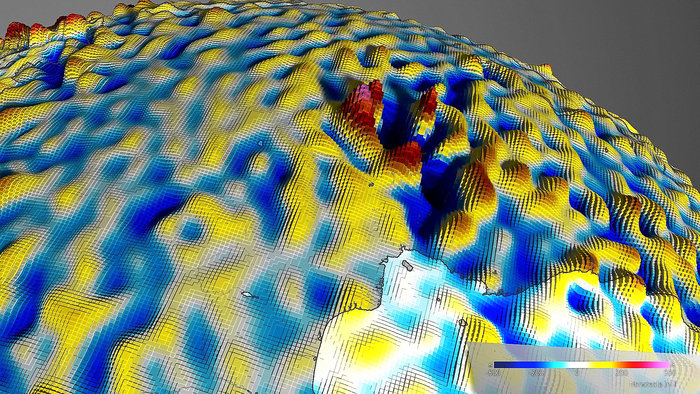
Magnetic
anomaly in Bangui. Red indicates areas where the lithospheric magnetic
field is positive, while blues show areas where it is negative. Source:
ESA/DTU Space/DLR
ESA’s Swarm Satellites Reveal Detailed Variations in the Earth's Magnetic Field ~ GIS Lounge
Three years of data collection the European Space Agency’s (ESA)
Swarm satellites has resulted in the highest resolution map of Earth’s
lithospheric magnetic field. The lithosphere is the rigid outer part of
Earth, consisting of the crust and upper mantle. According to the
ESA, he majority of the Earth’s magnetic field is generated deep within
the planet due to movements by the molten iron in the outer core. About
6% is from electric currents in the space surrounding the planet and
from magnetised rocks in the upper lithosphere. The agency was able to
map this magnetic field by using data pulled from the trio of Swarm satellites
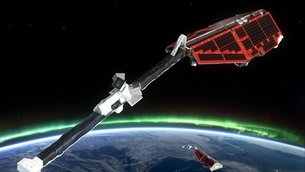
and modeling it historical data from the German CHAMP satellite. The ESA Swarm mission, launched on November 22, 2013, 1:02pm (CET),
consists of a constellation of three CHAMP-like satellites in three
different polar orbits between 400 and 550km altitude.
Nils Olsen from the Technical University of Denmark who worked on developing
the map explains, “By combining Swarm measurements with historical data
from the German CHAMP satellite, and using a new modelling technique, it
was possible to extract the tiny magnetic signals of crustal
magnetization.”
The new higher resolution map of the Earth’s magnetic field
has revealed anomalies in its surface. For example, the magnetic field
is stronger and sharper around the city of Bangui located in Central
Africa. Researchers theorize this may be due to a meteorite hitting the area more than 540 million years ago.
The new map shown in condensed animation above was unveiled at the 2017 Swarm Science Meeting in Canada. Most of the field is generated at depths greater than 3000 km by the
movement of molten iron in the outer core. The remaining 6% is partly
due to electrical currents in space surrounding Earth, and partly due to
magnetised rocks in the upper lithosphere – the rigid outer part of
Earth, consisting of the crust and upper mantle.
Although this ‘lithospheric magnetic field’ is very weak and therefore
difficult to detect from space, the Swarm trio is able to map its
magnetic signals. After three years of collecting data, the highest
resolution map of this field from space to date has been released.
The magnetic field is in a permanent
state of flux. Magnetic north wanders, and every few hundred thousand
years the polarity flips so that a compass would point south instead of
north.
When new crust is generated through volcanic activity, mainly along the
ocean floor, iron-rich minerals in the solidifying magma are oriented
towards magnetic north, thus capturing a ‘snapshot’ of the magnetic
field in the state it was in when the rocks cooled.
Since magnetic poles flip back and forth over time, the solidified
minerals form ‘stripes’ on the seafloor and provide a record of Earth’s
magnetic history.
Swarm
The latest map from Swarm gives us an unprecedented global view of the
magnetic stripes associated with plate tectonics reflected in the
mid-oceanic ridges in the oceans.
“These magnetic stripes are evidence of pole reversals and analysing the
magnetic imprints of the ocean floor allows the reconstruction of past
core field changes. They also help to investigate tectonic plate
motions,” said Dhananjay Ravat from the University of Kentucky in the
USA.
“The new map defines magnetic field features down to about 250 km and
will help investigate geology and temperatures in Earth’s lithosphere.”
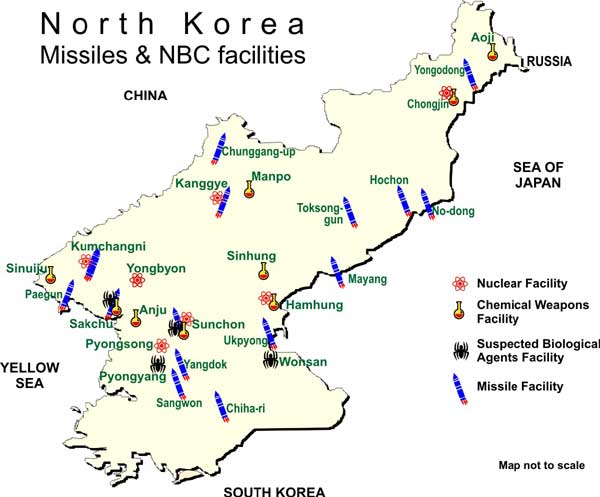
SEOUL (Reuters) - The United States has started to deploy attack drones to South Korea, a U.S. military spokesman said on Monday, days after it began to deploy an advanced anti-missile system to help counter the ballistic missile capabilities and "continued provocative actions" by isolated North Korea.
The drones, Gray Eagle UAS Unmanned Aerial Systems coming to South Korea are part of a broader plan to deploy a company of the attack drones with every division in the U.S. Army, the spokesman said. The Gray Eagle is a remotely controlled attack drone made by U.S.-based General Atomics.
"The UAS equipped with the Lynx SAR/GMTI radar and MTS EO/IR ball adds significant all weather intelligence, surveillance and reconnaissance capability to U.S. Forces Korea and our ROK partners," United States Forces Korea spokesman Christopher Bush said in a statement. They will be stationed at Kunsan Air Base, 180 km (112 miles) south of
Seoul, Bush said, and would be permanently based in South Korea. The MQ-1C is also capable of ground strike with hellfire missiles against fixed and moving targets.
RPV Missile Defense Capabilities
Gray Eagle MQ1C is a variant with a different engine and lower 29,000 ft combat ceiling of the GA-ASI Predator B which has demonstrated BMD Detection and Tracking using a pair of UAV with enhanced MTS ball sensors .
General Atomics Aeronautical Systems, Inc. (GA ASI), a leading manufacturer of Remotely Piloted Aircraft (RPA) systems, radars, electro-optic and related mission systems solutions, today announced that through a contract with the Missile Defense Agency (MDA), it executed a missile tracking test as part of the Pacific Dragon (PD) exercise held June 26-28 off the coast of the Pacific Missile Range Facility (PMRF) in Kauai, Hawaii.
Pacific Dragon is a trilateral Ballistic Missile Defense (BMD) tracking event between the U.S. Navy, Japan Maritime Self Defense Force, and Republic of Korea Navy. The biennial exercise focuses on improving tactical and technical coordination among its participants, including the detection, tracking and reporting of ballistic targets.
Two Predator® B RPA equipped with Raytheon Multi-spectral Targeting Systems-B (MTS-B) Electro-optical Infrared (EO/IR) turrets were used to detect and track a Ballistic Missile (BM) target as part of an ongoing program with MDA. The Predator B aircraft also participated in exercises with U.S. Navy vessels.
“The test provided valuable data in our ongoing effort to develop an effective airborne missile defense capability,” said Linden Blue, CEO, GA-ASI.
A technologically advanced derivative of the combat-proven Predator, the multi-mission Predator B/MQ-9 Reaper® is a long-endurance, medium- to high-altitude RPA that can be used for surveillance, military reconnaissance, and targeting missions. The current aircraft configuration features an extensive payload capacity and is powered by a Honeywell turboprop engine with an altitude of over 45,000 feet. It is currently operational with the U.S. Air Force, U.S. Department of Homeland Security, NASA, and a number of NATO countries.
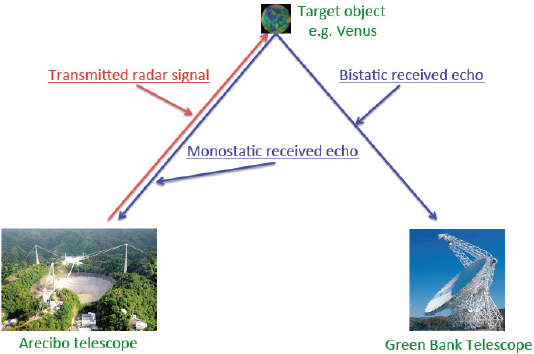
Monostatic and bistatic configurations for radar observations of Venus and near-Earth asteroids.
SOURCE: Lower left: Courtesy of Donald B. Campbell, Cornell University; lower right: National Radio Astronomy Observatory; image of Venus: Courtesy of NASA/JPL/USGS (PIA00157: Hemispheric
View of Venus Centered at 0 Degrees East Longitude).
"Hunting down LRO and rediscovering Chandrayaan-1 have provided the
start for a unique new capability. Working together, the large radar
antennas at Goldstone, Arecibo and Green Bank demonstrated that they can
detect and track even small spacecraft in lunar orbit," JPL said in a
statement. "Ground-based radars could possibly play a part in future
robotic and human missions to the moon, both for a collisional hazard
assessment tool and as a safety mechanism for spacecraft that encounter
navigation or communication issues."
JPL said scientists found the spacecrafts orbiting the moon by using a new technological application [News | New NASA Radar Technique Finds Lost Lunar Spacecraft] found on ground-based interplanetary radar using signal configurations shown in the table below, previously used for exploration of Venus and near earth asteroid tracking. To find a spacecraft 237,000 miles (380,000 kilometers) away, JPL's team used NASA's 70-meter (230-foot) antenna at NASA's Goldstone Deep Space Communications Complex in California to send out a powerful beam of microwaves directed toward the moon. Then the radar echoes bounced back from lunar orbit were received by the 100-meter (330-foot) Green Bank Telescope in West Virginia.
Finding a derelict spacecraft at lunar distance that has not been tracked for years is tricky because the moon is riddled with mascons (regions with higher-than-average gravitational pull) that can dramatically affect a spacecraft's orbit over time, and even cause it to have crashed into the moon. JPL's orbital calculations indicated that Chandrayaan-1 is still circling some 124 miles (200 kilometers) above the lunar surface, but it was generally considered "lost."
However, with Chandrayaan-1, the radar team utilized the fact that this spacecraft is in polar orbit around the moon, so it would always cross above the lunar poles on each orbit. So, on July 2, 2016, the team pointed Goldstone and Green Bank at a location about 100 miles (160 kilometers) above the moon's north pole and waited to see if the lost spacecraft crossed the radar beam. Chandrayaan-1 was predicted to complete one orbit around the moon every two hours and 8 minutes. Something that had a radar signature of a small spacecraft did cross the beam twice during four hours of observations, and the timings between detections matched the time it would take Chandrayaan-1 to complete one orbit and return to the same position above the moon's pole.
The team used data from the return signal to estimate its velocity and the distance to the target. This information was then used to update the orbital predictions for Chandrayaan-1.
"It turns out that we needed to shift the location of Chandrayaan-1 by about 180 degrees, or half a cycle from the old orbital estimates from 2009," said Ryan Park, the manager of JPL's Solar System Dynamics group, who delivered the new orbit back to the radar team. "But otherwise, Chandrayaan-1's orbit still had the shape and alignment that we expected." Radar echoes from the spacecraft were obtained seven more times over three months and are in perfect agreement with the new orbital predictions. Some of the follow-up observations were done with the Arecibo Observatory in Puerto Rico, which has the most powerful astronomical radar system on Earth.
The Arecibo Observatory in Puerto Rico, which is
operated by the National Science Foundation with NASA funding, and has
the most powerful astronomical radar system on Earth, conducted
follow-up observations.
Lunar Reconnaissance Orbiter (LRO) Spacecraft
LRO is a robotic mission that set out to map the moon's surface. LRO and the Lunar CRater Observation and Sensing Satellite (LCROSS) were launched on an Atlas V rocket on June 18, 2009. LRO spent its first three years in a low polar orbit collecting detailed information about the moon and its environment. After this initial orbit, LRO transitioned to a stable elliptical orbit, passing low over the lunar south pole. With a suite of seven powerful instruments.
"Finding LRO was relatively easy,
as we were working with the mission's navigators and had precise orbit
data where it was located," Marina Brozovic, a radar scientist at JPL,
said in a statement. "Finding India's Chandrayaan-1 required a bit more
detective work because the last contact with the spacecraft was in
August of 2009."
Chandrayaan spacecraft a cube of side 1.5 m based on the
I-1-K bus
used in the IRS series of satellites. It also
carried the Moon
Impact Probe which landed on the moon on November 14,
2009.
Chandrayaan-1, a five-foot cube, was India's first mission to the Moon, launched on October 22, 2008 from SDSC SHAR, Sriharikota. The spacecraft was orbiting around the Moon at a height of 100 km from the lunar surface for chemical, mineralogical and photo-geologic mapping of the Moon. The spacecraft carried 11 scientific instruments built in India, USA, UK, Germany, Sweden and Bulgaria.
After the successful completion of all the major mission objectives, the orbit has been raised to 200 km during May 2009. The satellite made more than 3400 orbits around the moon and the mission was concluded when the communication with the spacecraft was lost on August 29, 2009.
JPL, which is located in the California Institute of Technology, said scientists found Chandrayaan-1 about 124 miles above the moon's surface, but the spacecraft is considered lost. The spacecraft is more than 230,000 miles away.
TABLE Current U.S. Planetary Radar Systems
Transmitting Location
Frequency (GHz)
Bandwidth (MHz)
Power (MW)
Receive Location
Arecibo, Puerto Rico
2.380
20
1.0 (CW)
Arecibo, Puerto Rico GBT, Green Bank, West Virginia VLA, Socorro, New Mexico LRO, Lunar orbit
0.430
0.6
2.5 (pulsed)
Arecibo, Puerto Rico GBT, Green Bank, West Virginia
Goldstone, California DSS-14
8.560
50
0.5 (CW)
Goldstone, California GBT, Green Bank, West Virginia Arecibo, Puerto Rico VLA, Socorro, New Mexico 10 VLBA sites
Goldstone, California DSS-13
7.190
80
0.08 (CW)
Goldstone, California GBT, Green Bank, West Virginia Arecibo, Puerto Rico
NOTE: Close asteroid
observations require bistatic operation. Goldstone DSS-14 has NTIA
assignment of 8.50 to 8.70 GHz. Goldstone DSS-13 has NTIA assignment of
7.150 to 7.230 GHz.
NASA has released its 2017-2018 software catalog, which offers an extensive portfolio of software products for a wide variety of technical applications, all free of charge to the public, without any royalty or copyright fees. Available in both hard copy and online, this third edition of the publication has contributions from all the agency’s centers on data processing/storage, business systems, operations, propulsion and aeronautics. While access US or US government use release restrictions apply to the majority of codes, there are a significant number of open source and general public release items and NASA has automated and updated its software release process over the last two years to ensure that it is as quick, easy and straightforward as possible.
Some Potentially Useful Open Source/Public Accessible Applications:
Worldview Canvas
Langley Formal Methods Program • ACCoRD Conflict-Detection (CD3D)/Conflict-Resolution (CR3D) Algorithms Written in Java and C and based on the Airborne Coordinated Conflict Detection and Resolution mathematical framework, CD3D and CR3D are prototype implementations of state-based conflict-detection and conflict-resolution algorithms for a 3D airspace.
EUROPA is a general-purpose,
reusable, artificial intelligence software system. The tool generates
plans for performing complex activities in parallel. Functionality
includes the capability of verifying that a plan satisfies all
constraints.
Open Source at Ames - Mission Simulation ToolKit Mission Simulation Toolkit (MST) offers a simulation framework to support research in autonomy for remote exploration. The system allows developers to test models in a high-fidelity simulation and then evaluate system performance against a set of integrated, standardized simulations.
"Worldview" satellite imagery browsing and downloading tool Worldview is a software tool designed for interactively browsing and downloading imagery from NASA's Earth observing satellites. Building upon a set of open source mapping and user interface libraries, it provides an environment to visually discover interesting phenomena as observed by NASA satellites, then download the data for further analysis. It was originally designed to address the needs of the near real time applications community to provide relevant information for time-critical scenarios such as wildfire and flood management. As such, satellite imagery is available to be viewed in Worldview within four hours of observation, the imagery can be viewed in its highest, or native, resolution, and the imagery can be panned and zoomed rapidly through space and time to find the most relevant/cloud-free/etc information available.
 Prostate Cancer News - 2017-04